
Fintech Technology Trends for UK financial businesses are moving beyond simple digital banking and online payments. Artificial intelligence, open banking, financial automation, digital identity, fraud detection, cloud platforms, embedded finance and data-driven services are becoming important parts of how financial organisations operate and serve customers. For UK banks, fintech startups, lenders, insurers, payment companies and wealth management firms, the main question is no longer whether technology matters, but which technologies are useful, secure and practical to adopt.
The UK remains an important market for financial innovation, supported by established financial institutions, fintech companies, payment infrastructure and regulatory activity. Open banking, for example, continues to develop, while the Financial Conduct Authority (FCA) is working on the next stage of open banking and open finance. The FCA reported more than 16 million active open banking users and 53% year-on-year growth in open banking payments in 2025.
For financial businesses, these developments create opportunities but also introduce new responsibilities. Technology must improve efficiency without weakening security, customer protection, compliance or operational resilience.
What fintech technology trends are shaping UK financial businesses?
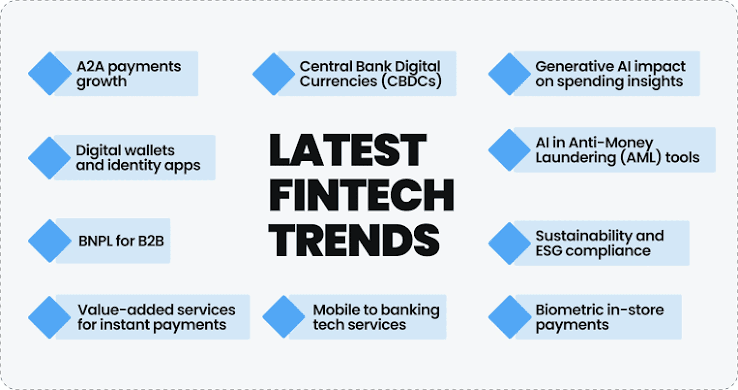
The most important fintech technology trends for UK businesses include artificial intelligence, open banking, digital payments, automated compliance, digital identity, fraud prevention, cloud infrastructure, API-based financial services, embedded finance and data analytics. These technologies are becoming more connected, allowing financial businesses to automate processes while offering more personalised and convenient services.
The strongest trend is not necessarily the adoption of one particular technology. It is the movement towards connected financial systems.
A bank may use AI for customer support, APIs for account connectivity, cloud infrastructure for scalability, automated identity verification for onboarding and machine learning for fraud monitoring. Each technology performs a different job, but together they create a more efficient financial operation.
For UK financial businesses, the most relevant trends include:
Artificial intelligence and machine learning
Agentic AI and automated financial workflows
Open banking and open finance
Account-to-account digital payments
Digital wallets and mobile payments
Embedded finance
Automated KYC and digital identity verification
RegTech and compliance automation
Fraud detection and financial crime technology
Cloud-based fintech infrastructure
API-first financial platforms
Data analytics and personalisation
Cybersecurity and operational resilience
Tokenisation and digital assets
Wealthtech, insurtech and lending technology
The value of each trend depends on the type of financial business, customer base, risk profile and existing technology infrastructure.
Why are UK businesses increasing their focus on fintech technology?
Fintech technology can help financial businesses reduce manual work, improve customer journeys, process information faster and build new services without replacing every existing system.
For example, a lending business may use digital identity checks and automated document processing to reduce the amount of manual information handling required during an application. A payment provider may use real-time fraud monitoring to identify suspicious transactions. A wealth management company may use data analytics to provide more relevant information to clients.
The business case therefore needs to begin with a genuine operational problem rather than technology for its own sake.
A useful technology project should answer at least one of these questions:
Does it reduce unnecessary manual work?
Does it improve customer experience?
Does it reduce operational or fraud risk?
Does it help employees make better decisions?
Does it improve compliance processes?
Does it create a useful new financial product?
Does it make existing systems easier to connect?
Does it provide better information for business decisions?
If a fintech solution cannot provide a clear answer, its adoption may create additional complexity rather than genuine value.
How is AI changing financial technology in the UK?
AI is becoming one of the most significant fintech technology trends for UK businesses because it can support operations, customer service, risk analysis, fraud monitoring, financial decision-making and internal productivity. However, AI adoption in financial services requires strong governance because inaccurate outputs, cyber risks, poor data and inappropriate automated decisions can create serious consequences.
The FCA has stated that firms are already using AI for efficiency and decision-making and has emphasised the need for safe, responsible and well-governed adoption. The FCA has also said it intends to rely on existing regulatory frameworks rather than introducing a separate set of AI-specific rules.
The Bank of England similarly identifies both efficiency opportunities and risks from AI adoption in financial services.
What are the most practical AI use cases for financial businesses?
AI can be applied across several areas of a financial organisation.
Customer support is one of the easier areas to understand. AI assistants can help customers find information, answer common questions and direct complex cases to human employees.
Internal operations can also benefit. AI tools can help employees summarise documents, search internal information, classify requests and prepare routine reports.
Financial businesses can also use machine learning models for:
Fraud detection
Transaction monitoring
Risk assessment
Customer segmentation
Forecasting
Document classification
Credit analysis
Complaint analysis
Financial data processing
Personalised recommendations
The important distinction is between using AI as an assistant and allowing AI to make consequential decisions without appropriate oversight.
For many organisations, the safer starting point is to use AI for repetitive and lower-risk activities before considering more advanced automated decision-making.
Could agentic AI become a major fintech trend?
Agentic AI could become increasingly relevant because it is designed to perform sequences of tasks rather than simply generate a response.
For example, an AI system could potentially receive a defined instruction, retrieve approved information, perform checks, prepare an action and request human approval before completing a transaction.
This creates opportunities for financial businesses, but it also creates new questions around authorisation, accountability, traceability and security.
The FCA has identified agentic commerce as an area that could change how financial decisions and transactions are made. Its 2026 work on AI testing includes agentic payments and other financial services applications.
The Bank of England has also highlighted questions around autonomous AI systems in payments, including authorisation, liability, fraud detection and the need for predictable payment outcomes.
For UK financial businesses, agentic AI therefore looks more like a developing opportunity than a technology that should be adopted without controls.
How should financial businesses approach AI implementation?
A practical approach can begin with a limited use case.
Identify a repetitive business process.
Establish what data the AI system will use.
Define what the system is allowed to do.
Keep sensitive decisions subject to appropriate human oversight.
Test accuracy and failure scenarios.
Monitor performance after deployment.
Review security, privacy and access controls.
Establish a clear process for correcting errors.
This approach allows businesses to learn from AI without immediately making it responsible for the most sensitive financial decisions.
How are open banking and open finance changing UK fintech?
Open banking is one of the clearest examples of how financial technology is changing the UK market. It enables customers and businesses to share access to financial information and make payments through regulated services, with consent and appropriate security controls.
The FCA describes open banking as a regulated way to share payment data with trusted applications and services. It is also developing a broader open finance approach that could extend data-sharing across areas such as credit, mortgages, pensions and insurance.
For financial businesses, this creates opportunities to build services around connected financial data.
Why is open banking important for UK financial businesses?
Open banking can reduce dependence on traditional financial processes by allowing businesses to connect directly with customer-authorised financial information and payment services.
Potential applications include:
Account aggregation
Affordability assessment
Faster payment initiation
Cash-flow analysis
SME lending
Personal finance management
Recurring payments
Financial comparison
Automated reconciliation
The commercial potential is particularly relevant for fintech startups and financial technology providers that build services on top of APIs.
The FCA reported that open banking payments grew 53% year on year in 2025, while active users exceeded 16 million.
The next phase is also developing. In June 2026, the FCA highlighted the launch of the UK Payments Initiative scheme as an important step for commercial variable recurring payments and the future of open banking payments.
What is the difference between open banking and open finance?
Open banking primarily focuses on banking information and payment services.
Open finance has a broader ambition. It can involve financial information connected with areas such as investments, pensions, insurance, mortgages and lending.
This wider approach could give financial businesses access to richer information, provided customers give appropriate consent and the ecosystem develops with strong security and consumer protection.
The FCA's open finance roadmap sets out development work through 2030, with early priorities including SME lending and improving access to mortgages.
For financial technology companies, this means open finance could become an important platform for new products over the coming years.
Which fintech technologies are improving digital payments?
Digital payments continue to evolve through account-to-account payments, digital wallets, mobile payment services, recurring payment technology and improved payment infrastructure.
The focus is shifting from simply making payments digital to making them faster, more connected and easier to integrate into other financial services.
Why are account-to-account payments becoming important?
Account-to-account payments allow money to move directly between bank accounts without relying on the traditional card journey.
For businesses, this may create opportunities around cost, payment choice and customer experience.
The UK is also considering the future design of retail payments infrastructure. In June 2026, the Retail Payments Infrastructure Board launched a consultation covering future payment capabilities, including account-to-account payments at the point of sale and enhanced cross-border payments.
This development matters because payment infrastructure determines what financial businesses can realistically build on top of it.
How are digital wallets changing customer expectations?
Digital wallets allow customers to store payment credentials and use mobile devices or online services to make payments.
For financial businesses, wallets can become more than payment tools. They can potentially connect payments with loyalty services, identity, financial information and other customer experiences.
The main challenge is trust. Customers need confidence that their money, identity and payment information are protected.
A wallet strategy therefore needs to consider authentication, fraud prevention, account recovery and customer support alongside convenience.
How is embedded finance creating new fintech opportunities?
Embedded finance means financial services are integrated into a non-financial product, platform or customer journey.
A business may offer payments, insurance, credit, wallets or other financial services directly within its existing platform rather than requiring customers to visit a separate financial provider.
For example, a business software platform could integrate payment acceptance. An online marketplace could provide financing options. A travel platform could offer insurance during booking.
The underlying financial service may come from a regulated financial institution or fintech provider while the customer experiences it as part of another service.
Why does embedded finance matter for UK businesses?
Embedded finance can make financial services more relevant because they appear at the point where customers already need them.
However, integration does not remove regulatory responsibilities. Businesses need to understand who provides the regulated service, who handles customer data, who manages complaints and who is responsible for risk controls.
The technology architecture also needs to be reliable because a failure in an embedded financial feature can affect the wider customer experience.
For fintech providers, APIs are especially important because they allow financial functionality to be integrated into third-party platforms.
How are KYC and digital identity technologies evolving?
Know Your Customer processes are essential for many financial businesses, but traditional onboarding can be slow when it depends heavily on manual document checks.
Digital identity technology can help verify customers, collect information and automate parts of the onboarding process.
A modern KYC workflow may include:
Digital identity verification
Document verification
Biometric checks
Address verification
Sanctions screening
Customer risk assessment
Ongoing monitoring
Automated record keeping
Automation can reduce repetitive work, but it does not remove the need for proper compliance processes.
What should financial businesses consider when choosing KYC technology?
Accuracy is only one consideration.
A financial business should also examine:
Data security
False positive rates
Integration options
Audit trails
Customer experience
Accessibility
Manual review processes
Provider reliability
Regulatory requirements
Data retention and privacy
A KYC platform that works well technically but creates a poor customer experience may still become an operational problem.
The best solution is usually one that balances verification strength with a simple and understandable onboarding journey.
How is RegTech changing financial compliance?
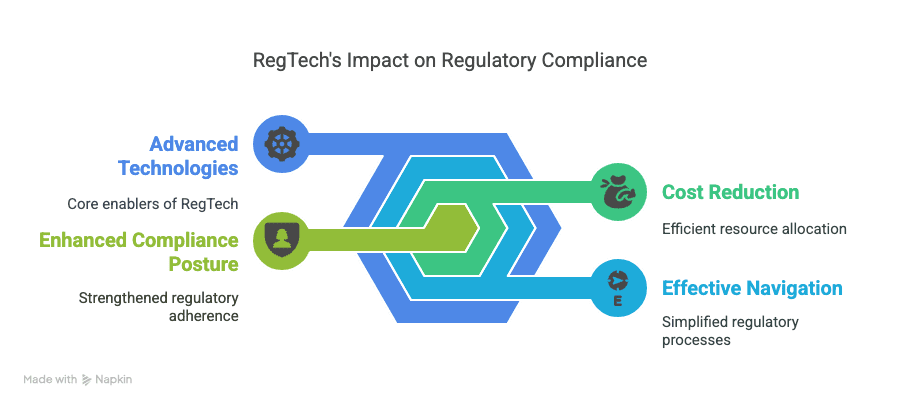
RegTech refers to technology designed to support regulatory and compliance processes.
For UK financial businesses, RegTech can help manage large volumes of information, automate checks and improve visibility across compliance activities.
Common applications include:
Transaction monitoring
Regulatory reporting
AML monitoring
Risk assessment
Compliance workflows
Document management
Audit trails
Policy monitoring
Customer screening
The advantage is not that technology replaces compliance professionals. Instead, technology can help compliance teams spend less time on repetitive administrative tasks and more time investigating complex issues.
Why is compliance automation becoming more important?
Financial businesses often operate with large amounts of customer, transaction and operational data.
Manual monitoring becomes increasingly difficult as transaction volumes grow.
Automation can help identify unusual patterns and direct cases to employees for further review.
However, automated systems can also produce false alerts or miss unusual activity. Therefore, human review, model testing and continuous monitoring remain important.
How are fintech companies using technology to fight fraud?
Fraud prevention is becoming more data-driven. Financial businesses can analyse transaction patterns, account behaviour, device information and other signals to identify unusual activity.
Machine learning can help detect patterns that may not be obvious through simple rules.
A fraud monitoring system may consider:
Transaction amount
Transaction frequency
Account behaviour
Device information
Location signals
Payment history
Authentication behaviour
Changes in customer activity
The objective is not simply to block as many transactions as possible.
A system that blocks legitimate customers too often can create frustration and lost business.
The better objective is to identify genuinely suspicious activity while allowing legitimate customers to complete normal transactions.
Is AI making fraud prevention easier?
AI can improve fraud detection by analysing large quantities of information quickly, but it does not make fraud prevention automatically reliable.
The Bank of England has warned that AI can also amplify cyber and operational risks within financial services. Its 2026 Financial Stability Report highlights risks associated with greater AI use, including cyber threats and operational vulnerabilities.
Financial businesses therefore need both stronger detection capabilities and stronger controls around the technology itself.
Why is cybersecurity becoming a core fintech technology trend?
Every increase in digital financial activity creates a larger technology environment that needs protection.
Financial businesses manage valuable information, payment credentials, identities and transaction data. A cybersecurity weakness can therefore affect both the organisation and its customers.
Modern fintech security may involve:
Multi-factor authentication
Encryption
Access management
Network monitoring
Threat detection
Secure APIs
Device intelligence
Fraud monitoring
Backup systems
Incident response
Employee security training
Cybersecurity should not be treated as something added after a fintech product is built.
It needs to be part of the technology architecture from the beginning.
How does AI change the cybersecurity challenge?
AI can help security teams detect unusual behaviour and analyse large volumes of security information.
At the same time, attackers can also use AI to improve phishing, automate attacks and identify weaknesses.
This creates an ongoing technology race.
Financial businesses therefore need to consider both the benefits and risks of AI rather than treating AI as automatically positive.
Why are cloud platforms important for UK fintech companies?
Cloud technology allows financial businesses to access computing infrastructure, databases, storage and software services without building every component internally.
For fintech startups, this can reduce the need for large upfront infrastructure investments and make it easier to scale technology as the customer base grows.
Cloud platforms can support:
API services
Customer databases
Analytics
Application hosting
AI workloads
Backup systems
Development environments
Monitoring tools
However, cloud adoption creates questions around third-party dependencies, access controls, resilience, data protection and service availability.
Should every financial business move everything to the cloud?
Not necessarily.
Technology decisions should depend on business requirements, regulatory obligations, existing architecture and risk tolerance.
Some organisations may use a hybrid approach, combining cloud services with existing infrastructure.
The objective should be a reliable and secure technology environment rather than cloud adoption simply because it is fashionable.
How are APIs changing fintech software?
APIs allow different software systems to communicate with each other.
They are one of the foundations of modern fintech because financial services increasingly depend on connections between banks, fintech platforms, payment providers, identity services, accounting systems and customer applications.
An API-first financial platform can make it easier to:
Connect third-party services
Launch new products
Automate data transfers
Build customer-facing applications
Integrate payment services
Connect identity verification
Share approved financial information
The quality of an API matters just as much as its existence.
Good fintech APIs need strong authentication, clear documentation, reliable performance, monitoring and sensible error handling.
How is data analytics supporting financial decision-making?
Financial businesses generate enormous amounts of data through transactions, customer interactions, applications, payments and operational activity.
Data analytics turns this information into business insight.
Financial organisations can use analytics to understand:
Customer behaviour
Revenue patterns
Transaction activity
Product performance
Fraud patterns
Operational efficiency
Customer retention
Credit risk
Marketing performance
Analytics becomes particularly valuable when different data sources can be combined responsibly.
For example, a lender may use application data, transaction information and customer history to develop a clearer understanding of a customer's financial situation.
The quality of the decision still depends on data quality, governance and the suitability of the analytical method.
How is personalisation changing financial customer experience?
Customers increasingly expect financial services to be relevant to their circumstances.
Personalisation can involve tailored notifications, relevant financial information, personalised product recommendations or customer journeys based on previous interactions.
For example, a wealth management platform could provide information based on an individual's portfolio. A banking application could organise financial information in ways that make it easier for customers to understand.
Personalisation must be handled carefully.
Financial businesses need to avoid confusing customers, making inappropriate recommendations or using information in ways customers do not expect.
Trust should remain more important than excessive personalisation.
Which fintech technologies are most useful for different UK financial businesses?
Different financial sectors have different priorities. A bank may focus heavily on fraud prevention and digital banking, while an insurance company may prioritise automated claims and data analytics.
Financial businessTechnologies with strong practical relevanceBanksAI, open banking, digital payments, fraud detection, cloud, cybersecurityFintech startupsAPIs, cloud platforms, AI, digital identity, embedded financePayment companiesAccount-to-account payments, fraud technology, APIs, digital walletsLending businessesOpen finance, automated KYC, data analytics, AI-assisted risk assessmentWealth managementData analytics, personalisation, digital onboarding, AI assistantsInsurance companiesAutomation, data analytics, digital claims, AI and fraud detectionFinancial advisersCRM automation, AI assistants, digital onboarding, secure client portalsInvestment businessesData analytics, automation, APIs, cybersecurity and tokenisation
This comparison shows why there is no single list of fintech technologies that every company should adopt.
The right combination depends on the business model and the problem being solved.
How can UK financial businesses choose the right fintech technology?
The best technology decision begins with a business requirement rather than a technology trend.
A financial business can assess a potential solution through several stages.
What should be checked before buying fintech software?
First, the business should define the problem.
For example, “the onboarding process takes too long” is more useful than “the business needs AI”.
Second, the business should measure the existing process.
Questions may include:
How long does the process take?
How many employees are involved?
Where do errors occur?
How often do customers abandon the process?
What information is duplicated?
What compliance checks are manual?
Third, the business should identify the technology requirements.
A solution may need API integration, reporting, audit trails, customer authentication or compatibility with an existing core platform.
Fourth, the financial business should assess the provider.
Important considerations include:
Security controls
Reliability
Integration capability
Support
Scalability
Data handling
Contract terms
Business continuity
Provider dependencies
Finally, the organisation should test the technology before committing to a large rollout.
Why is integration often more important than software features?
A fintech platform can have dozens of impressive features, but those features provide little value if the system cannot communicate with existing business software.
Integration should therefore be assessed early.
A financial business may already use separate systems for:
CRM
Accounting
Payments
Customer onboarding
Compliance
Reporting
Marketing
Document management
A new platform should reduce fragmentation rather than create another isolated system.
What challenges can UK businesses face when adopting fintech?
Fintech adoption can create significant benefits, but implementation is rarely straightforward.
One challenge is legacy technology.
Large financial organisations may rely on systems that have been developed over many years. Replacing them completely may be too expensive or risky.
Another challenge is data quality.
AI, analytics and automation depend heavily on reliable information. Poorly structured or incomplete data can reduce the quality of automated processes.
Security is another concern. More connected systems create more points that need protection.
There can also be employee resistance. Staff may worry that automation will replace their roles or create additional work during implementation.
Training and communication are therefore important parts of technology adoption.
How can businesses reduce fintech implementation risk?
A phased approach is often more practical than attempting a complete transformation at once.
A typical implementation can involve:
Identifying one high-value problem.
Selecting a limited technology solution.
Running a controlled pilot.
Measuring the results.
Fixing integration or workflow problems.
Training relevant employees.
Expanding the system gradually.
Monitoring performance continuously.
This approach gives the organisation an opportunity to learn before the technology becomes deeply embedded.
What role will blockchain and tokenisation play in UK fintech?
Blockchain and tokenisation remain areas of interest within financial technology, although their practical value varies significantly by use case.
Tokenisation can represent assets or financial instruments digitally and potentially make certain processes more efficient.
Potential applications include:
Tokenised funds
Digital securities
Settlement
Asset ownership records
Digital representations of financial instruments
The UK regulatory environment around digital assets continues to develop.
The FCA's 2026 annual work programme includes work relating to cryptoasset regulation and fund tokenisation, while the Financial Policy Committee has identified digital assets and stablecoins as areas requiring continued monitoring and responsible innovation.
For businesses, this means blockchain should be assessed according to a clear business use case rather than adopted simply because it is associated with fintech innovation.
How are wealthtech, insurtech and lending platforms evolving?
Fintech technology trends for UK financial businesses are not limited to banking and payments.
Wealthtech platforms are using digital onboarding, data analytics and automation to make investment services more accessible and easier to manage.
Insurtech companies are applying automation and data analysis to areas such as underwriting, claims and customer service.
Lending platforms are using digital applications, automated verification, data analysis and open banking information to improve parts of the borrowing process.
What is changing in wealthtech?
Wealth management is becoming increasingly digital.
Customers may expect online onboarding, digital portfolios, real-time information and easier communication with advisers.
Technology can reduce administrative tasks while giving advisers better access to customer information.
However, financial advice remains an area where suitability, customer outcomes and professional judgement are particularly important.
What is changing in insurtech?
Insurance businesses can use technology to automate claims processes, analyse information and improve customer communication.
For example, digital claims platforms can reduce paperwork and give customers clearer visibility into the status of a claim.
AI may also assist with document analysis and fraud detection, but automated systems still require appropriate controls and human review where necessary.
How is lending technology changing?
Digital lending platforms can make applications faster by connecting identity verification, financial information, affordability analysis and decision workflows.
Open finance could eventually provide further opportunities in this area. The FCA has identified SME lending as an early priority for open finance development.
What fintech trends should UK businesses watch through 2027 and beyond?
Several technologies are likely to remain important as financial businesses move into the next phase of digital transformation.
Will AI become a standard financial business tool?
AI is likely to become increasingly embedded in ordinary financial workflows.
Rather than appearing only as a separate chatbot, AI may become part of:
Employee software
Customer service
Compliance systems
Fraud monitoring
Financial analysis
Document processing
Risk management
Payment systems
The important question will increasingly be how well AI is governed rather than simply whether a company uses AI.
Could open finance become more important than open banking?
Open finance has the potential to extend consented data sharing beyond traditional banking.
The FCA's roadmap sets out a multi-year approach, with 2026 focused on prioritising use cases, 2027 on framework design and coordination, and 2028–2030 on scaling and delivery.
This makes open finance one of the longer-term fintech technology trends for UK businesses to monitor.
Will digital payments become more flexible?
The UK's payments infrastructure is being considered for future capabilities that could support account-to-account payments and other emerging forms of digital money.
Financial businesses should therefore consider whether their payment architecture is flexible enough to support multiple payment methods.
Will cybersecurity become even more important?
Yes. Greater connectivity, AI adoption, APIs, cloud infrastructure and digital payments all increase the importance of security.
The challenge is not simply preventing traditional attacks. Financial businesses must also consider risks created by third-party technology, automated systems and increasingly sophisticated cyber threats.
What does successful fintech adoption look like for a UK financial business?
Successful adoption does not necessarily mean using the largest number of new technologies.
A successful financial business may have a relatively simple technology environment that is secure, well integrated and closely aligned with its business goals.
For example, a small lending company might gain more value from:
Strong digital onboarding
Reliable identity verification
Open banking connectivity
Automated compliance workflows
Secure customer communication
Good data analytics
than from implementing a complex collection of unrelated AI systems.
The same principle applies to larger organisations.
Technology should solve real problems.
What should financial businesses prioritise first?
A practical priority order may look like this:
Security and operational resilience
Regulatory and compliance requirements
Customer experience
Manual process automation
Data quality and analytics
System integration
AI and advanced automation
Experimental or emerging technologies
This does not mean emerging technology is unimportant. It means foundational systems need to be reliable before more advanced technology can deliver its full value.
How can fintech technology improve customer experience without reducing trust?
Technology can make financial services faster and easier, but customers still need transparency and human support.
A digital onboarding process should explain what information is being requested.
An AI assistant should make it clear when a customer is interacting with an automated system where that distinction matters.
Fraud controls should protect customers without creating unnecessary friction.
Personalised financial services should remain understandable.
The strongest customer experience is therefore not the one with the most automation. It is the one where technology removes unnecessary effort while keeping customers informed and protected.
Why should UK fintech businesses focus on technology governance?
Governance becomes more important as financial businesses use more automated systems.
A company may have AI models, cloud providers, APIs, payment systems and third-party data services all connected to important business processes.
If one component fails, the impact may extend beyond a single application.
The Bank of England's recent work on AI and financial stability highlights concerns around operational risks, critical third parties and cyber vulnerabilities associated with increasing technology adoption.
Technology governance should therefore cover:
Who owns the system?
Who can access it?
What data does it use?
What happens when it fails?
How is performance monitored?
How are changes approved?
How are incidents handled?
What happens if a technology provider becomes unavailable?
These questions are particularly important for financial organisations because technology failures can affect customers, transactions and regulatory obligations.
What should UK financial businesses do next?
The most useful next step is not to adopt every fintech trend. It is to identify where technology can create measurable improvement.
A financial business can begin by reviewing its customer journey and internal operations.
The review should identify:
Manual processes
Slow customer journeys
Repeated data entry
Fraud risks
Compliance bottlenecks
Poor system integration
Customer service gaps
Reporting problems
Security weaknesses
Each issue can then be matched with an appropriate technology.
For example, repeated manual identity checks may indicate a need for digital KYC. Fragmented financial information may indicate an opportunity for open banking connectivity. High volumes of routine customer questions may support an AI-assisted service desk. Poor reconciliation processes may benefit from financial automation.
This problem-first approach prevents technology adoption from becoming an expensive exercise without a clear business outcome.
What are the key fintech technology trends for UK financial businesses?
The fintech market is moving towards connected, automated and data-driven financial services. AI, open banking, digital payments, digital identity, RegTech, fraud prevention, cloud platforms, APIs, embedded finance and advanced analytics are among the most relevant technologies for UK financial businesses.
The direction of travel is clear, but adoption will not look the same for every company.
For a bank, AI governance and fraud prevention may be priorities. For a fintech startup, API infrastructure and cloud scalability may matter more. For a lender, digital identity, open finance and automated risk assessment may provide greater value. For an insurer, automation and data analytics may have a stronger business case.
The UK market is also developing its financial infrastructure and regulatory approach. Open banking is moving towards a new phase, open finance is being developed through a multi-year roadmap, and payment infrastructure is being considered for future forms of account-to-account and digital payments.
AI is likely to remain another major focus. UK regulators and financial authorities are actively examining both its benefits and risks, particularly around operational resilience, financial decision-making, cyber threats and autonomous systems.
For financial businesses, the strongest technology strategy is therefore unlikely to be based on chasing every new trend. It is more likely to come from selecting technologies that solve genuine problems, integrating them carefully and maintaining strong controls.
Fintech technology trends for UK financial businesses are ultimately about more than new software. They are about creating financial services that can operate efficiently, respond to changing customer expectations and remain secure and trustworthy as technology develops.
The businesses that benefit most from fintech innovation will be those that combine technology adoption with good data, sensible governance, strong cybersecurity, regulatory awareness and a clear understanding of customer needs.
Tags
Amzsoft Innovexa
Engineering and delivery notes from the Amzsoft Innovexa team — fintech platforms, AI automation, and product engineering.