
What is SEO for Business Websites and How It Works in 2026
When clients ask us what SEO actually means today, we usually pause because it’s not as simple as “rank keywords” anymore. In 2026, SEO for business websites is more about aligning your website with real customer intent—what people search when they’re confused, comparing vendors, or ready to act. We’ve worked with businesses where traffic looked fine but leads were zero, and that’s where website seo optimization shifts from numbers to relevance.
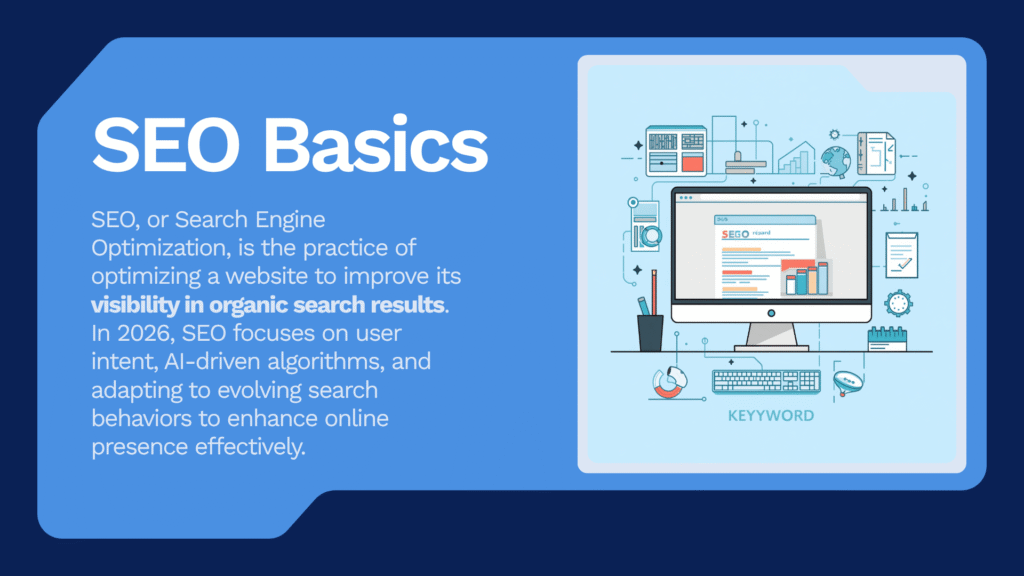
A proper seo strategy for companies now blends technical fixes, content clarity, and trust signals. It’s also less about chasing Google and more about understanding how your audience behaves across search, maps, and even AI answers. Some clients come in expecting quick wins, but we usually start by fixing foundational gaps first. Think of it less like a trick and more like building a system that earns visibility over time. And honestly, the businesses that accept this early tend to see steadier growth.
Difference Between Traditional SEO and Modern SEO
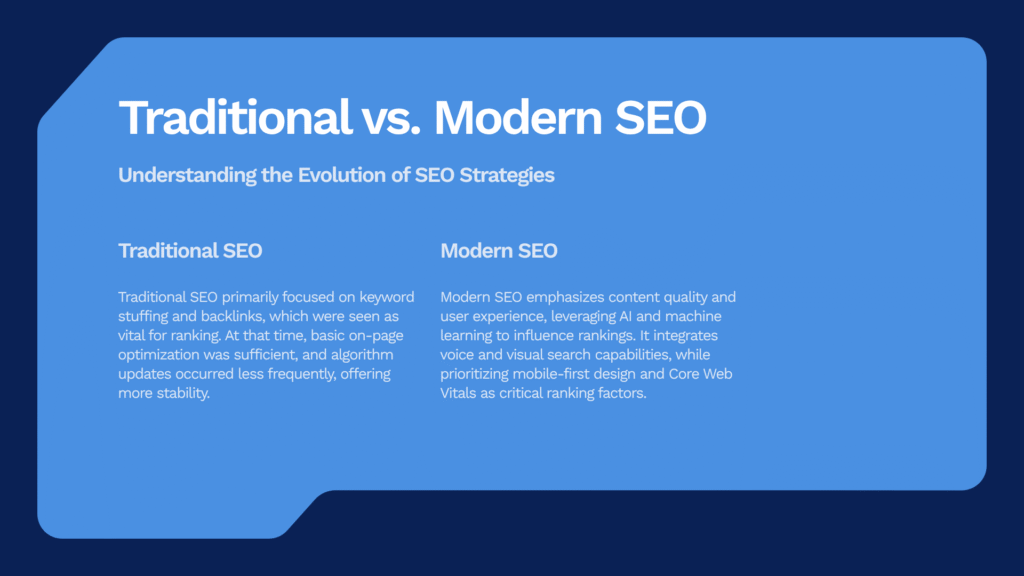
A lot of businesses we meet are still stuck in what we’d call “2018 SEO thinking”—bulk keywords, backlinks from anywhere, and content written just to rank. That approach doesn’t hold up now. Modern website seo optimization focuses more on usefulness than volume, and Google’s getting better at spotting the difference. Earlier, you could rank with aggressive keyword use, but now that often backfires. We’ve had to clean up sites where over-optimization actually caused ranking drops. Today’s seo strategy for companies leans into user behavior—how long someone stays, what they click next, whether they trust what they read. It’s less predictable, sure, but also more honest. You can’t fake expertise anymore, especially in competitive niches. And while that makes things harder, it also means businesses doing things right finally get an edge.
Why SEO is Critical for Business Growth in 2026
We’ve seen businesses rely heavily on ads, and it works—until budgets tighten or costs spike. That’s usually when they come to us asking about SEO for business websites. The reason SEO matters now isn’t just traffic, it’s stability. Organic visibility builds slowly, but it compounds in a way ads don’t. A good seo strategy for companies creates a consistent flow of relevant visitors, especially from very specific searches like “best supplier near me” or “cost of service X in [city].” These are the users who convert. Website seo optimization also builds credibility—people trust businesses that show up naturally. It’s not instant, and we’re upfront about that, but for long-term growth, it’s one of the few channels that doesn’t disappear when you stop spending.
How Google Ranking Algorithms Work for Business Websites
Crawling, Indexing, and Ranking Explained Simply
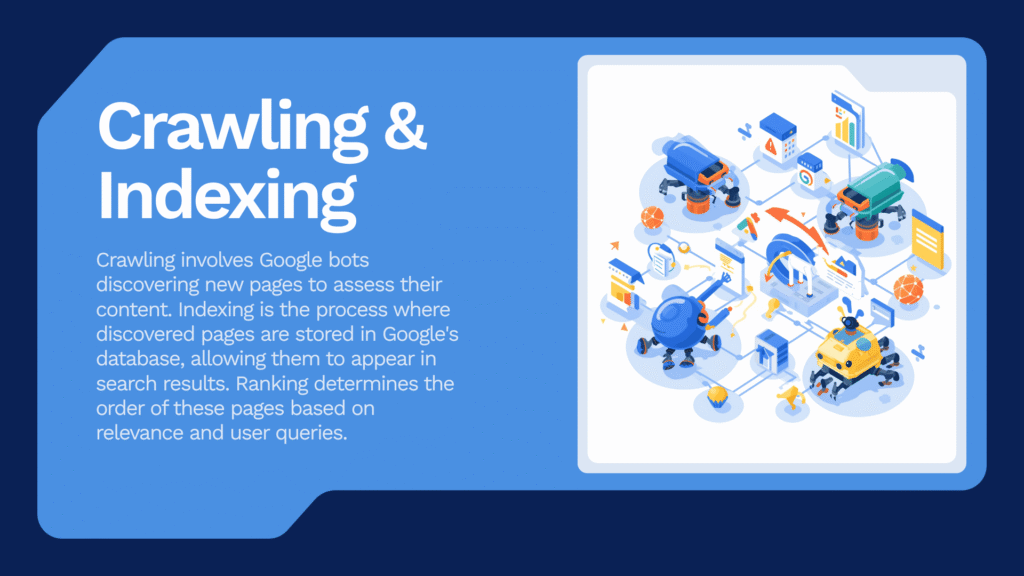
We usually explain this to clients in plain terms—Google first discovers your pages (crawling), then decides if they’re worth storing (indexing), and finally decides where they show up (ranking). Sounds simple, but where things break is in the details. SEO for business websites We’ve seen sites where important pages weren’t even indexed because of small technical issues. Website seo optimization at this stage is about making sure Google can actually access and understand your content. Then comes relevance—does your page match what someone is searching for? That’s where your on page seo guide really matters. And finally, ranking depends on trust, usability, and how helpful your page actually is. It’s not magic, but it’s also not fully predictable, which is why consistency matters more than shortcuts.
Key Google Ranking Factors for 2026
Clients often ask us for a checklist of ranking factors, but it’s rarely that clean. Still, some patterns hold up. Content quality is huge—if your page doesn’t genuinely answer a query, it won’t last. Then comes user experience—slow sites, confusing layouts, or poor mobile usability hurt more than people expect. Backlinks still matter, but we focus on relevance over quantity now. SEO for business websites Local signals are becoming stronger too, especially for service-based businesses. A solid seo strategy for companies also includes internal linking and structured content. And one thing we’ve noticed lately—Google rewards clarity. Pages that directly answer questions (AEO-style) tend to perform better, especially for long-tail searches.
SEO vs Paid Ads: What Should Businesses Focus On
Long-Term ROI of SEO for Companies
We’ve had honest conversations with clients where we tell them—SEO won’t beat ads in speed, but it usually wins in sustainability. With SEO for business websites, the payoff comes later, but it sticks around. One client we worked with saw almost no movement for three months, then suddenly started getting consistent leads without increasing spend. That’s the nature of it. Website seo optimization builds assets—pages that keep working for you. A good seo strategy for companies focuses on compounding results, not quick spikes. It’s slower, yes, but often more reliable once it kicks in.
When to Combine SEO and Paid Marketing
In some cases, we actually recommend using both. If you’re launching a new service or entering a competitive market, ads can give immediate visibility while SEO builds in the background. We’ve done this for local businesses targeting geo-specific queries where ads captured early leads and SEO gradually reduced dependency. The key is not to treat them as competing channels. Google ranking strategies today work best when supported by real user data, and ads can provide that early insight. Over time, as your organic presence grows, you can shift the balance.
Step-by-Step SEO Strategy for Business Websites
Keyword Research for Business Website SEO
How to Find High-Intent Keywords for Your Business
We don’t start keyword research with tools—we start with conversations. What are your customers actually asking before they hire you? That’s where high-intent keywords come from. SEO for business websites We’ve found phrases like “cost of X service in [city]” or “best provider near me” often convert better than high-volume generic terms. Seo tips for small business often overlook this and chase traffic instead. A practical seo strategy for companies focuses on intent first, then volume. Tools help refine, but the real insight comes from understanding your audience’s mindset. And yes, sometimes the best keywords are the ones with lower competition but clearer intent.
Using Primary and Secondary Keywords Effectively
A mistake we see often is forcing keywords into content unnaturally. It usually reads awkwardly and doesn’t perform well. Instead, we guide clients to build content around a primary topic and then layer in secondary keywords naturally. Your on page seo guide should feel like a conversation, not a checklist. Website seo optimization today rewards context—Google understands variations better than before. So instead of repeating the same phrase, we focus on covering the topic thoroughly. It feels more natural and usually ranks better too.
Website Structure Optimization for Better Rankings
Ideal Site Architecture for Business Websites
We’ve seen websites with great services but confusing structure—pages buried, navigation unclear, users getting lost. That hurts both rankings and conversions. A clean structure helps Google understand your site and helps users find what they need quickly. For most businesses, we recommend a simple hierarchy—home, services, sub-services, and supporting content. It sounds basic, but it works. Website seo optimization isn’t always about adding more, sometimes it’s about simplifying what’s already there.
Importance of Internal Linking in SEO
Internal linking is one of those things clients rarely notice but makes a big difference. We use it to guide both users and search engines through the site. For example, linking a blog to a service page helps pass relevance and keeps users engaged longer. It’s a core part of any seo strategy for companies, especially when scaling content. Done right, it creates a network of pages that support each other instead of existing in isolation.
Complete On-Page SEO Guide for Business Websites
Title Tags, Meta Descriptions, and Headings Optimization
This is where small tweaks can have a noticeable impact. We’ve rewritten titles for clients and seen click-through rates improve within weeks. Your on page seo guide should prioritize clarity—what is the page about, and why should someone click? Meta descriptions don’t directly rank, but they influence behavior. Headings help structure content so it’s easier to scan. These aren’t complicated fixes, but they’re often overlooked.
Image SEO and Alt Text Best Practices
Images are often ignored in website seo optimization, but they matter more than people think. We optimize file sizes for speed and use alt text to describe images properly. It helps with accessibility and gives search engines more context. We’ve seen small improvements in visibility just from cleaning this up. It’s not a major ranking factor alone, but it contributes to overall performance.
URL Structure Optimization
Messy URLs can confuse both users and search engines. We usually recommend keeping them short, descriptive, and aligned with the page topic. Something like “/services/seo-consulting” works better than random strings. It’s a small part of SEO for business websites, but it adds to clarity and trust. And once set, it’s better not to change URLs frequently unless necessary.
Technical SEO Basics Every Business Website Needs
Website Speed and Core Web Vitals
We’ve had clients lose potential leads just because their site took too long to load. Speed isn’t just technical—it’s user experience. Google also considers it in ranking. Website seo optimization here involves compressing images, reducing scripts, and improving server response times. It’s not always visible, but users feel it immediately.
Mobile Optimization and User Experience
Most traffic now comes from mobile, yet we still see sites designed mainly for desktop. That creates friction. Buttons too small, text hard to read—users leave quickly. Google notices that. A solid seo strategy for companies always includes mobile-first thinking. It’s not optional anymore.
Fixing Crawl Errors and Broken Links
These are the quiet issues that slowly hurt your site. Broken links, missing pages, crawl errors—they add up over time. We run regular audits to catch these early. It’s not exciting work, but it keeps your site healthy and accessible.
Content Strategy for Business Website SEO
Creating Helpful, User-Focused Content
We always tell clients—write for the person, not the algorithm. Content that genuinely helps tends to perform better long-term. Answer real questions, address concerns, and don’t overcomplicate things. That’s the foundation of a good on page seo guide.
Blog Strategy for Consistent Traffic Growth
Blogging still works, but only when it’s intentional. Random posts won’t do much. We plan content around user journeys—awareness, consideration, decision. That’s how you build steady traffic over time. It’s slower, but more meaningful.
Avoiding Thin and Duplicate Content
Publishing just for the sake of it usually backfires. We’ve seen sites with dozens of low-quality pages that never rank. It’s better to have fewer, stronger pages. Website seo optimization is about depth, not volume.
Advanced SEO Tips and Google Ranking Strategies for 2026
Local SEO Tips for Small Business Websites
Optimizing Google Business Profile
For local businesses, this is often the first thing we fix. An incomplete or outdated profile can cost you leads. We make sure details are accurate, categories are correct, and updates are consistent. It’s one of the simplest yet most effective seo tips for small business.
Using Location-Based Keywords for GEO SEO
We encourage clients to include location naturally—city names, service areas, local terms. Not forced, just relevant. It helps capture geo-specific searches that are often high intent.
Building Local Citations and Reviews
When we start working on local visibility, this is usually where we see the biggest gaps—either inconsistent business details across platforms or barely any reviews to build trust. Reviews sound simple, but in practice, most businesses either forget to ask or do it in a way that feels awkward. We usually help clients set up a small, repeatable process—like asking right after a successful service or adding a gentle reminder in follow-ups. It works better than random requests. Citations, on the other hand, are more about consistency than quantity; your business name, address, and phone need to match everywhere. This part of website seo optimization often gets ignored, but it directly impacts local rankings. For businesses targeting specific areas, it also supports GEO signals without needing heavy content. We’ve seen cases where just cleaning up listings improved visibility within weeks. It’s not flashy, but it builds a strong foundation. And honestly, without trust signals like reviews, even good rankings don’t convert well.
Building Authority and Trust for Higher Rankings
Importance of E-E-A-T in 2026
We’ve noticed a shift where Google is no longer just scanning pages—it’s evaluating credibility in a broader sense. Experience, expertise, authority, and trust (E-E-A-T) show up in subtle ways, like how clearly you explain your service or whether your content reflects real-world understanding. SEO for business websites Clients sometimes assume this means adding fancy badges or certifications, but it’s usually more grounded than that. We guide businesses to show actual work—before/after examples, case studies, even small project breakdowns. A strong seo strategy for companies now includes making your expertise visible, not just claiming it. Even something as simple as adding a real author name with context can help. It’s also tied closely to your on page seo guide—clear, honest content tends to perform better. Over time, this builds trust not just with Google, but with users who are comparing multiple options. And in competitive niches, that trust often becomes the deciding factor.
How to Build High-Quality Backlinks
Backlinks are still part of most google ranking strategies, but the way we approach them has changed a lot. We’ve worked with clients who previously bought links in bulk, and cleaning that up was harder than starting fresh. Now, we focus on earning links through relevance—industry blogs, partnerships, local mentions, or even useful resources people naturally reference. It’s slower, no doubt, and sometimes clients get impatient early on. But when links come from the right context, they actually support your overall seo strategy for companies instead of risking penalties. We also look at what content is worth linking to—because not every page deserves backlinks. Sometimes, creating one strong guide or tool does more than ten average pages. It’s less about chasing links and more about giving people a reason to link to you.
Common SEO Mistakes Business Websites Must Avoid
Keyword Stuffing and Over-Optimization
We’ve had clients come in with pages that technically “followed SEO rules” but read like a robot wrote them. Keywords repeated in every sentence, headings forced, content hard to trust. It used to work years ago, but now it often does the opposite. Modern website seo optimization favors natural flow and context. When we rewrite these pages, we usually reduce keyword usage and focus more on clarity—and rankings often improve. It’s a bit counterintuitive for people who’ve been told to “add more keywords.” A good on page seo guide today is less about density and more about coverage. If your content answers the query properly, you don’t need to force it.
Ignoring Mobile and User Experience
This is one of those issues that doesn’t show up in reports immediately but quietly hurts performance. We’ve tested sites where everything looked fine on desktop, but on mobile, buttons overlapped or pages took forever to load. Users leave quickly in those cases, and that behavior feeds back into rankings. A practical seo strategy for companies always includes real device testing, not just assumptions. It’s not just about design—it’s about how easily someone can take action. And if that’s broken, no amount of SEO will fix the outcome.
Publishing Content Without Strategy
We often see blogs that were clearly started with good intent but lost direction over time—random topics, no clear audience, no connection to services. That’s where things stall. Content needs to support your broader seo strategy for companies, not exist separately. We usually map content to specific user stages or queries, especially those micro-intent searches like “is X worth it” or “how much does Y cost locally.” It makes the effort more focused. Website seo optimization works better when every page has a role, even if it’s a small one. Otherwise, you end up with volume but no real impact.
How Long Does SEO Take for Business Websites
Realistic SEO Timeline for 2026
This is probably the most common question we get, and we try to answer it without overselling. In most cases, early movement shows up in 2–3 months—small ranking shifts, some impressions—but meaningful traffic or leads usually take closer to 4–6 months. SEO for business websites Sometimes longer, depending on competition. We’ve had clients worry in month two, then see steady growth by month five. That’s just how SEO for business websites tends to behave. A proper seo strategy for companies builds momentum gradually, not overnight. And while that can feel slow, it’s also what makes the results more stable once they come in.
Factors That Affect Ranking Speed
There’s no fixed timeline because too many variables are involved. A new website will naturally take longer than an established one. Competition plays a big role—ranking for niche local terms is very different from national keywords. Website seo optimization quality also matters; technical issues can slow things down without you realizing it. Content consistency is another factor—we’ve seen growth stall just because publishing stopped midway. Even external factors, like competitors improving their sites, can affect progress. It’s a moving target, which is why we focus more on direction than exact timelines.
Future of SEO for Business Websites Beyond 2026
AI and Search Engine Evolution
Search is becoming less about links and more about answers, which changes how we approach content. We’re already seeing AI-generated summaries taking space in results, and that means your content needs to be clear enough to be picked up as a source. A modern seo strategy for companies includes structuring information in a way that’s easy to extract—concise explanations, well-organized sections, and direct answers. It’s not about writing less, but about writing more clearly. Website seo optimization is slowly blending into answer optimization, whether we like it or not.
Voice Search and AEO Optimization
We’ve noticed more conversational queries showing up in data—longer phrases, more natural language, often location-based. That’s where AEO comes in. Instead of just targeting keywords, we focus on answering questions directly, almost like how a person would respond. This fits well with seo tips for small business, especially those targeting local users asking things like “best service near me” or “who offers X in [area].” It’s a subtle shift, but an important one. And businesses that adapt early tend to have an advantage.
SEO Checklist for Business Websites in 2026
We’re not big fans of rigid checklists, mostly because every business is different, but we do follow a loose framework. First, make sure your site structure actually makes sense—users shouldn’t have to dig to find key pages. Then comes speed and mobile usability, which are still foundational for website seo optimization. Content should be relevant, not just present, and aligned with your seo strategy for companies. Basic on page seo guide elements like titles and headings still matter, just not in an over-optimized way. We also keep an eye on consistency—updates, fixes, small improvements over time. It’s not about doing everything at once, but about not ignoring the basics while chasing advanced tactics.
Conclusion
If there’s one thing we’ve learned working with different businesses, it’s that SEO for business websites rarely fails because of lack of effort—it usually fails because of lack of direction. Many clients come to us after trying random tactics, hiring multiple agencies, or following outdated seo tips for small business that didn’t fit their actual goals. What tends to work in 2026 is a steady, grounded approach—fixing what’s broken, aligning content with real user intent, and sticking to a clear seo strategy for companies over time. Website seo optimization isn’t about doing everything at once; it’s about doing the right things consistently, even when results feel slow at first. We’ve seen growth come from simple changes—better page clarity, stronger internal linking, or answering very specific queries others ignored. SEO for business websites And while google ranking strategies keep evolving, the core idea hasn’t changed much: if your website genuinely helps people and makes their decision easier, it will eventually perform. Our role is just to make that process clearer, more structured, and a lot less frustrating than what most businesses have experienced before.
Amzsoft Innovexa Blog
Content creator and technology enthusiast sharing insights on the latest trends and best practices.