Modern supply chains are more complex than ever. Products often pass through multiple suppliers, manufacturers, distributors, logistics providers, warehouses, and retailers before reaching customers. While globalization has increased efficiency and market reach, it has also introduced significant security risks.
Data manipulation, counterfeit products, shipment fraud, unauthorized access, and lack of transparency continue to challenge businesses across industries. As organizations search for reliable ways to secure operations, Blockchain Solutions have emerged as a transformative technology capable of improving trust, transparency, and security throughout the supply chain ecosystem.
By combining blockchain technology, digital ledger technology, smart contracts, and real-time product traceability, businesses can create a secure supply chain environment where transactions are transparent, verifiable, and resistant to tampering.
This guide explores how blockchain solutions improve supply chain security, reduce fraud, enhance transparency, and support long-term business growth.
What Is Supply Chain Security, and Why Are Blockchain Solutions Becoming Essential?
Blockchain Solutions are becoming essential because they provide a secure, transparent, and tamper-resistant framework for managing supply chain data. They help organizations reduce fraud, improve product traceability, strengthen compliance, and establish trust among all stakeholders involved in logistics and operations.
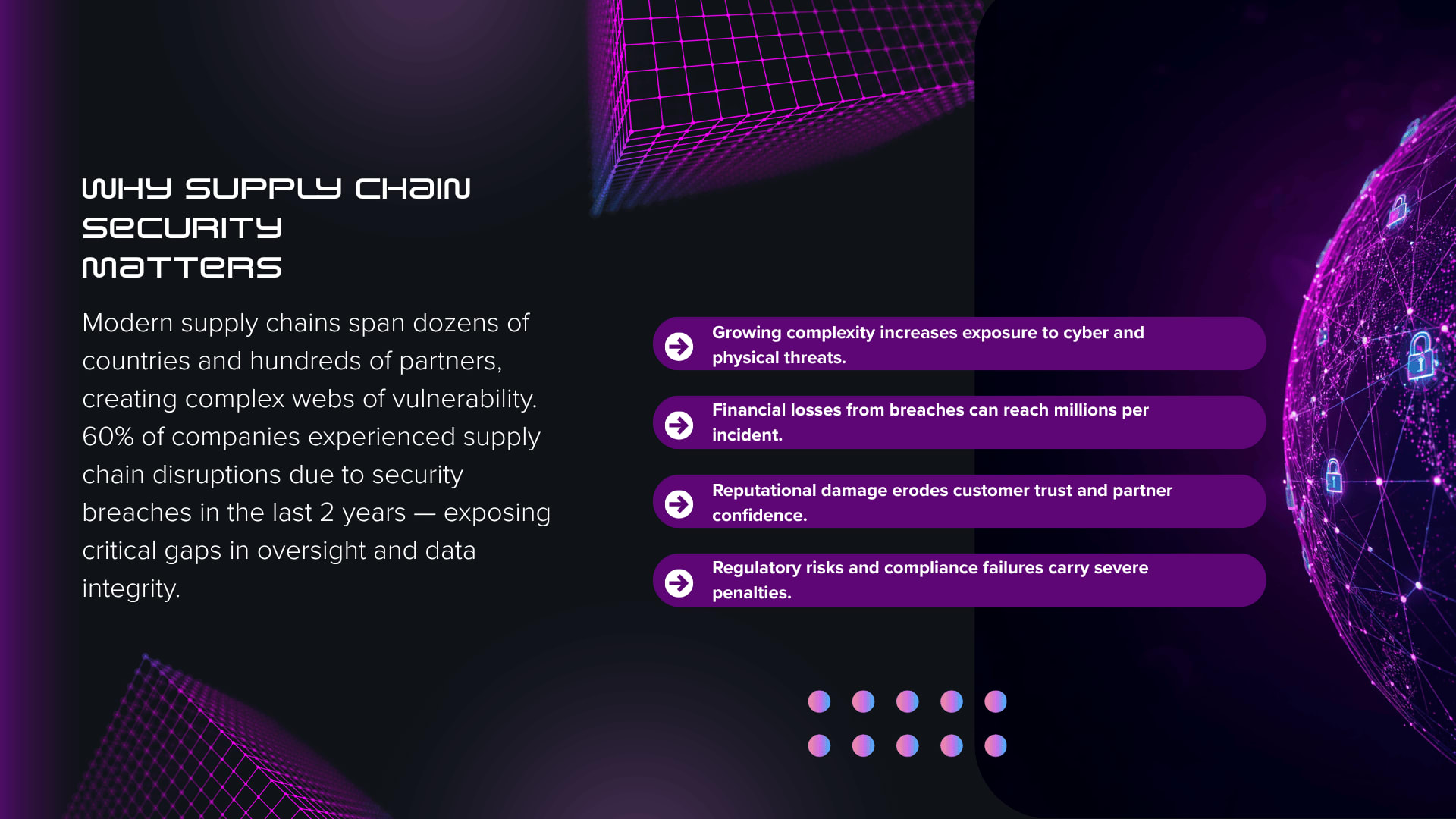
Supply chain security refers to the protection of products, information, financial transactions, and operational processes throughout the entire supply chain network.
Businesses today face increasing challenges such as:
Counterfeit products
Data breaches
Supplier fraud
Inventory manipulation
Regulatory compliance issues
Cybersecurity threats
Shipment theft
Traditional systems often rely on centralized databases that can be altered, hacked, or accessed without proper authorization. Blockchain technology introduces a decentralized approach where every transaction is recorded across a distributed network.
This creates:
Greater transparency
Improved accountability
Better auditability
Enhanced security controls
What does supply chain security mean in modern logistics and operations?
Supply chain security involves protecting products, data, assets, and business processes from risks that may disrupt operations. Blockchain Solutions strengthen this protection by creating immutable records and improving visibility across every stage of the supply chain.
In modern logistics management, security extends beyond physical goods.
Organizations must secure:
Supplier information
Inventory records
Transportation data
Compliance documentation
Customer information
Financial transactions
A single compromised record can create costly disruptions.
For example:
A manufacturer sourcing electronic components from multiple countries may struggle to verify supplier authenticity using traditional systems. Blockchain-powered verification creates a trusted record of every transaction and shipment movement.
Why are traditional supply chain systems vulnerable to fraud and cyber threats?
Traditional systems often operate in isolated databases maintained by different organizations. These disconnected environments create visibility gaps that criminals can exploit.
Common weaknesses include:
Manual recordkeeping
Human error
Duplicate records
Limited transparency
Centralized data storage
Delayed information sharing
When information exists in multiple systems, inconsistencies become difficult to detect.
A fraudulent supplier may alter shipping records or product certifications without immediate detection. This vulnerability creates opportunities for supply chain fraud and counterfeit product distribution.
How do blockchain solutions address growing supply chain security concerns?
Blockchain Solutions address security concerns by creating a shared, immutable ledger that records every transaction transparently. This approach improves traceability, prevents unauthorized modifications, and enables real-time verification across supply chain networks.
Unlike traditional databases, blockchain records cannot be easily altered after validation.
Each transaction is:
Verified by network participants
Cryptographically secured
Linked to previous records
Permanently stored
This creates a reliable source of truth for all stakeholders.
What are the most common security risks in supply chains today?
Several risks threaten modern supply chain operations:
Counterfeit products
Data breaches
Supplier fraud
Inventory theft
Shipment diversion
Documentation forgery
Compliance violations
Industries with complex global supply chains face especially high risks due to multiple intermediaries and limited visibility.
How does data manipulation impact supply chain integrity?
Data manipulation can undermine trust throughout the supply chain.
Examples include:
Altered shipping documents
Modified inventory records
Fake compliance certifications
Incorrect product origin information
Such manipulation can result in:
Financial losses
Product recalls
Regulatory penalties
Brand damage
Blockchain technology significantly reduces these risks by maintaining immutable transaction histories.
Why is end-to-end visibility critical for secure supply chains?
End-to-end visibility enables businesses to track products throughout their lifecycle.
Benefits include:
Faster issue detection
Improved risk management
Better supplier accountability
Enhanced customer trust
More accurate inventory tracking
Blockchain Solutions provide continuous visibility by recording every supply chain event in real time.
Which industries benefit the most from blockchain-based supply chain security?
Several industries benefit significantly from blockchain implementation.
These include:
Manufacturing
Pharmaceuticals
Food and beverage
Retail
Automotive
Aerospace
Luxury goods
Each industry faces unique security challenges that blockchain can address.
How are blockchain solutions transforming the food and beverage industry?
Food safety depends on accurate product traceability.
Blockchain technology helps organizations:
Track ingredients from source to shelf
Identify contamination origins quickly
Verify supplier certifications
Improve recall management
When contamination occurs, companies can isolate affected products faster, minimizing losses and protecting consumers.
Why is blockchain technology important for pharmaceutical supply chains?
Counterfeit medicines remain a serious global concern.
Blockchain Solutions help pharmaceutical companies:
Verify product authenticity
Track drug movement
Prevent counterfeit distribution
Improve regulatory compliance
Patients benefit from greater confidence in medication safety and quality.
How do manufacturers use blockchain solutions to improve security and traceability?
Manufacturers use blockchain to create trusted records for:
Raw materials
Production processes
Quality inspections
Shipment tracking
This enhanced visibility reduces fraud while improving operational efficiency.
How Do Blockchain Solutions Enhance Supply Chain Security and Transparency?
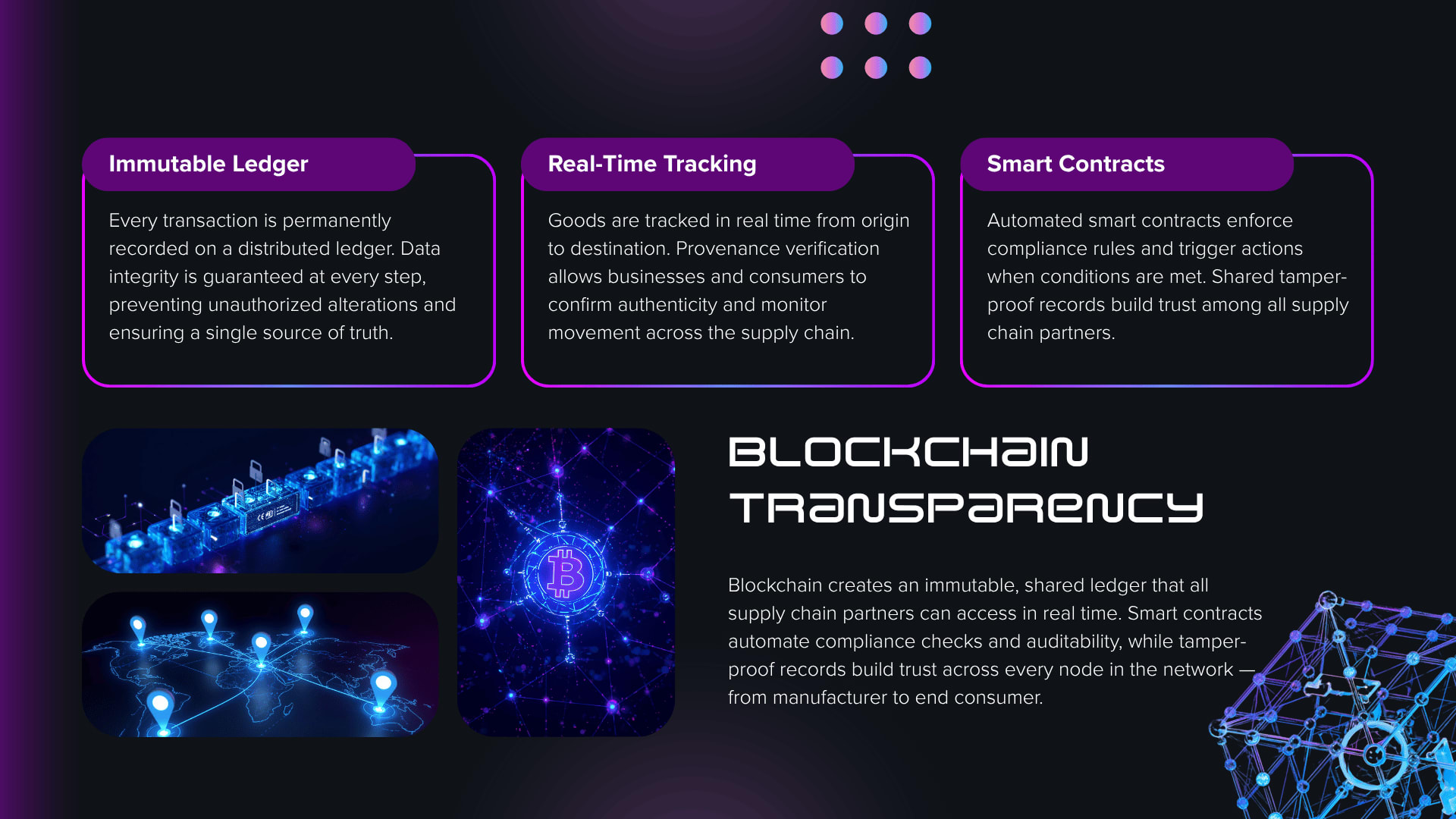
Blockchain Solutions enhance supply chain security and transparency by creating immutable transaction records, enabling real-time product traceability, automating processes through smart contracts, and establishing trusted collaboration among stakeholders.
Transparency remains one of blockchain's most valuable contributions to supply chain management.
Instead of relying on fragmented databases, organizations gain access to a unified source of verified information.
Traditional Supply Chain vs Blockchain-Powered Supply Chain
FeatureTraditional Supply ChainBlockchain-Powered Supply ChainData StorageCentralizedDecentralizedTransparencyLimitedHighData IntegrityVulnerable to modificationImmutableTraceabilityOften fragmentedEnd-to-endFraud DetectionReactiveProactiveCompliance AuditsManualAutomatedStakeholder TrustModerateStrongProduct VerificationDifficultReal-time
How does blockchain technology create a secure and tamper-proof supply chain?
Blockchain technology creates a secure and tamper-proof supply chain by distributing transaction records across multiple participants and using cryptographic validation to prevent unauthorized changes.
Every transaction becomes part of a permanent chain of records.
This structure makes manipulation extremely difficult.
Key security features include:
Decentralization
Cryptographic hashing
Consensus mechanisms
Immutable records
What role does distributed ledger technology play in supply chain security?
Digital ledger technology serves as the foundation of blockchain systems.
Benefits include:
Shared visibility
Data consistency
Enhanced trust
Reduced disputes
All participants access the same verified information, reducing discrepancies.
How does blockchain prevent unauthorized data modifications?
Blockchain uses cryptographic links between records.
If someone attempts to modify historical data:
The alteration becomes visible.
Validation mechanisms detect inconsistencies.
Network participants reject unauthorized changes.
This ensures long-term data integrity.
How do blockchain solutions improve product traceability across the supply chain?
Blockchain Solutions improve product traceability by recording every movement, transaction, and ownership transfer throughout the product lifecycle, creating a complete and transparent history.
Traceability has become increasingly important for both businesses and consumers.
Organizations can identify:
Product origins
Manufacturing locations
Transportation routes
Storage conditions
How can businesses track products from source to consumer using blockchain?
The tracking process typically includes:
Recording raw material sourcing
Logging manufacturing activities
Monitoring transportation events
Tracking warehouse storage
Verifying retail delivery
Each event creates a permanent blockchain record.
Why is real-time traceability important for risk management?
Real-time visibility helps organizations:
Detect delays
Identify quality issues
Reduce theft risks
Improve recall management
Faster access to information leads to better decision-making.
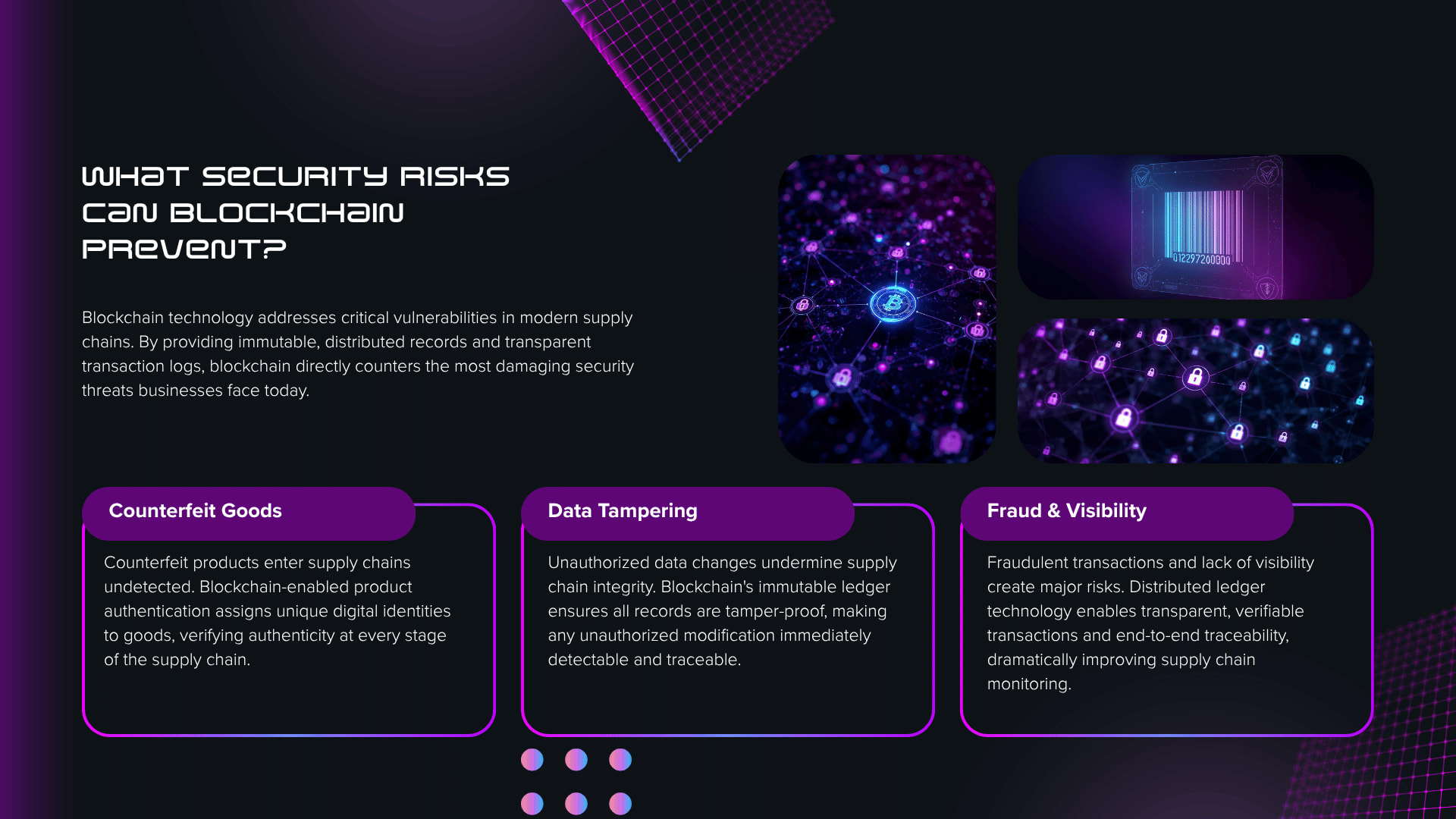
How do blockchain solutions reduce fraud and counterfeit products?
Blockchain Solutions reduce fraud by establishing verifiable product histories that cannot be altered without detection. This transparency makes it significantly harder for counterfeit products to enter legitimate supply chains.
Counterfeit goods cost businesses billions annually.
Blockchain helps combat this issue through enhanced verification.
How does blockchain verify product authenticity?
Authentication may include:
Digital product identifiers
QR codes
RFID integration
Blockchain transaction verification
Customers and businesses can verify product legitimacy instantly.
What are the benefits of immutable records in preventing counterfeit goods?
Immutable records provide:
Permanent transaction histories
Reliable audit trails
Improved accountability
Stronger brand protection
These capabilities create significant barriers for counterfeiters.
How can blockchain solutions strengthen supplier verification and compliance?
Blockchain Solutions strengthen supplier verification by creating transparent records of certifications, audits, and transactions. This improves trust while simplifying compliance management.
Supplier-related risks continue to increase across global supply chains.
Blockchain improves oversight and accountability.
How does blockchain simplify supplier audits?
Blockchain centralizes verification records.
Auditors can quickly review:
Certifications
Inspection reports
Transaction histories
Compliance documentation
This reduces administrative burden and improves audit efficiency.
How can organizations maintain regulatory compliance using blockchain?
Blockchain supports compliance through:
Automated recordkeeping
Transparent documentation
Immutable audit trails
Real-time monitoring
Tags
Amzsoft Innovexa
Engineering and delivery notes from the Amzsoft Innovexa team — fintech platforms, AI automation, and product engineering.