
Creating a Seamless User Experience for Your App is no longer optional in today’s competitive digital market. Users expect fast-loading, intuitive, and highly responsive applications that solve problems without confusion or friction. Whether a business operates an eCommerce platform, healthcare application, fintech product, or SaaS solution, user expectations continue to rise.
A seamless app experience directly impacts customer satisfaction, engagement, retention, and revenue growth. Studies across the mobile app industry consistently show that users abandon applications that feel slow, confusing, or difficult to navigate. On the other hand, apps with intuitive navigation, personalized experiences, and optimized performance often enjoy higher retention rates and stronger customer loyalty.
Modern businesses are increasingly investing in mobile app UX design, app usability optimization, and user-friendly mobile apps to stay ahead. Companies such as Amzsoft Innovexa are helping brands build scalable and customer-focused applications that prioritize seamless app interaction and long-term engagement.
This guide explores practical strategies, UX best practices, and future trends businesses can apply to improve customer engagement and create high-performing applications.
Why Is a Seamless User Experience Important for Your App’s Success?
A Seamless User Experience for Your App improves customer satisfaction, increases retention, boosts app engagement, and strengthens conversions. Users stay longer and interact more with applications that are fast, intuitive, secure, and easy to navigate. Businesses that prioritize UX often experience stronger brand trust and improved revenue growth.
A well-designed app is not simply visually attractive. It guides users naturally through every interaction while minimizing confusion and effort. Smooth onboarding, responsive performance, intuitive navigation, and accessible interfaces all contribute to user satisfaction.
In highly competitive industries, users rarely give apps second chances. Even minor usability issues can result in uninstallations, negative reviews, and lower retention rates.
What does a seamless user experience mean in modern app development?
A seamless user experience refers to creating interactions that feel natural, intuitive, and efficient across every stage of the user journey. From onboarding to checkout, users should complete tasks with minimal effort and maximum clarity.
Modern app development focuses heavily on:
Fast performance
Intuitive app interfaces
Consistent navigation
Accessibility
Personalized experiences
Frictionless workflows
A seamless experience means users do not need to “figure out” how the app works. The design should feel familiar and self-explanatory.
How do users define a smooth and frustration-free app experience?
Users typically define a seamless experience through practical outcomes rather than design terminology. They expect:
Pages to load quickly
Menus to be easy to understand
Features to work without bugs
Forms to require minimal effort
Navigation to feel predictable
Interactions to feel responsive
For example, food delivery apps succeed because users can search, customize, order, and pay within minutes. Every unnecessary step increases frustration.
Why do first impressions matter in app user experience design?
First impressions heavily influence whether users continue using an app. Research across the mobile app ecosystem consistently shows that many users decide within seconds whether an application feels trustworthy and usable.
Poor onboarding experiences often lead to:
Higher uninstall rates
Reduced engagement
Negative reviews
Lower conversion rates
Strong first impressions usually include:
Clean visual hierarchy
Simple onboarding
Fast loading speeds
Clear value propositions
Minimal setup friction
How does a seamless user experience improve customer retention?
A Seamless User Experience for Your App keeps users engaged because it removes friction, confusion, and delays. When customers can complete tasks easily and consistently, they are more likely to return regularly and develop long-term loyalty.
Retention is directly connected to user satisfaction. Apps that frustrate users lose engagement quickly.
Successful retention strategies include:
Personalized recommendations
Smooth onboarding
Reliable app performance
Consistent cross-device experiences
Intelligent notifications
Why do users uninstall apps with poor navigation and usability?
Users uninstall apps when basic tasks become frustrating. Common usability problems include:
Confusing menus
Slow response times
Too many pop-ups
Difficult account setup
Broken navigation paths
If users cannot quickly accomplish their goals, they often switch to competitors offering simpler experiences.
For instance, a banking app with complicated transaction flows creates anxiety and distrust. In contrast, intuitive financial apps simplify transfers, payments, and account management.
How can better UX increase app session duration and engagement?
Apps with optimized UX naturally encourage deeper engagement.
Better UX increases:
Session duration
Feature exploration
In-app purchases
User retention
Social sharing
Examples of engagement-enhancing UX features include:
Personalized content feeds
Smooth animations
Clear CTAs
Gamification
Smart recommendations
Streaming platforms perform exceptionally well because they minimize decision fatigue through personalized suggestions and intuitive interfaces.
What are the biggest challenges businesses face when creating seamless app experiences?
Businesses often struggle to balance functionality, design simplicity, performance, and scalability simultaneously.
Common UX challenges include:
Feature overload
Inconsistent design systems
Slow app performance
Poor user research
Weak accessibility implementation
How do slow loading times impact mobile app user experience?
Slow-loading apps damage engagement almost immediately.
Users expect apps to load within seconds. Delays can result in:
Increased bounce rates
Lower retention
Reduced trust
Decreased conversions
Performance optimization strategies include:
Compressing images
Reducing unnecessary scripts
Optimizing APIs
Using caching systems
Minimizing heavy animations
Why does inconsistent design reduce user trust?
Consistency helps users predict interactions. Inconsistent layouts, colors, buttons, or workflows create confusion.
Inconsistent UX often causes:
Cognitive overload
Reduced confidence
Navigation mistakes
Lower usability
Strong design systems ensure consistency across screens and devices.
How can businesses avoid overwhelming users with complex interfaces?
One of the biggest UX mistakes is adding too many features without prioritization.
Businesses can simplify interfaces by:
Reducing unnecessary options
Using progressive disclosure
Prioritizing core actions
Maintaining visual hierarchy
Removing clutter
Minimalist interfaces generally improve app usability because users can focus on primary tasks.
How does seamless UX influence app conversions and revenue?
A Seamless User Experience for Your App directly improves conversions by making actions easier and faster. Users are more likely to subscribe, purchase, or complete forms when navigation feels intuitive and friction-free.
Good UX reduces hesitation throughout the customer journey.
Can a better user experience improve in-app purchases?
Yes. Simplified purchasing experiences significantly increase conversions.
Effective in-app purchase UX includes:
One-tap checkout
Secure payment systems
Clear pricing
Minimal form fields
Fast payment confirmation
Complicated checkout processes frequently cause cart abandonment.
How does frictionless navigation help increase lead generation?
Apps that guide users efficiently toward actions generate more leads.
Lead-focused UX strategies include:
Clear call-to-action buttons
Simplified forms
Smart content placement
Reduced distractions
Guided workflows
For example, SaaS apps often use step-by-step onboarding to move users toward free trials or premium subscriptions.
Why are businesses partnering with experts like Amzsoft Innovexa for UX-focused app development?
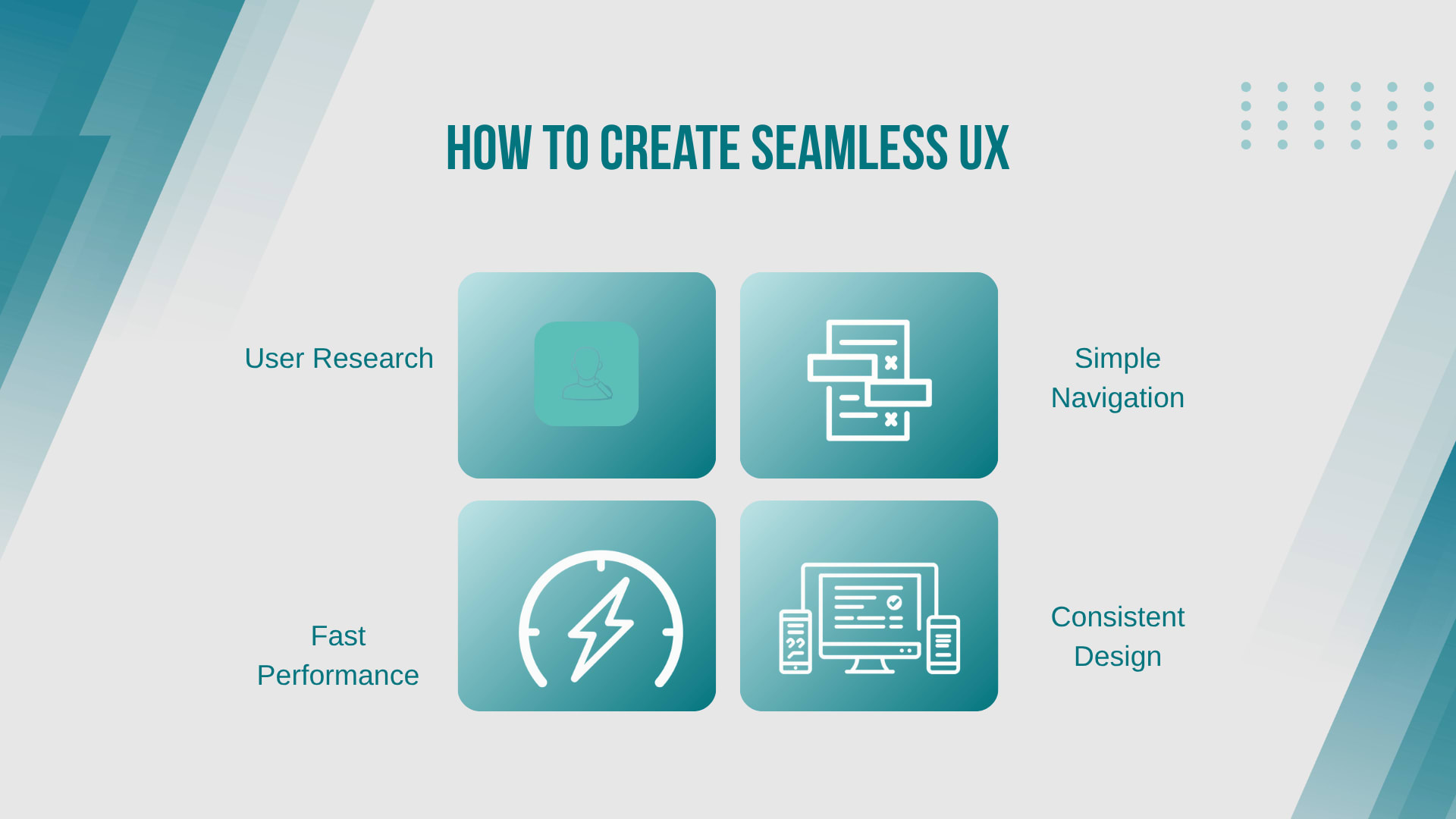
Businesses increasingly recognize that app success depends heavily on usability and customer experience. Professional UX-focused development teams help brands avoid costly design mistakes and improve engagement.
What UX strategies does Amzsoft Innovexa use to improve app usability?
Companies like Amzsoft Innovexa focus on:
User-centered design
Performance optimization
Cross-platform consistency
Mobile responsiveness
Accessibility improvements
Data-driven UX decisions
Their approach combines technical performance with intuitive interaction design.
How can professional UX optimization reduce customer churn?
Professional UX optimization helps businesses identify friction points before they impact users.
Benefits include:
Lower abandonment rates
Improved onboarding
Better retention
Higher customer satisfaction
Increased lifetime value
How Can You Create a Seamless User Experience for Your App?
To create a Seamless User Experience for Your App, businesses should prioritize intuitive navigation, fast performance, accessibility, personalization, and user-focused design decisions. Consistent testing and customer feedback are essential for long-term UX improvement.
Successful app experiences rarely happen by accident. They result from careful planning, iterative design, and continuous optimization.
How do you design an app interface that users can navigate effortlessly?
Creating effortless navigation requires reducing cognitive load and helping users complete tasks quickly.
Key principles include:
Clear visual hierarchy
Consistent layouts
Predictable interactions
Simple menus
Easy access to core features
What are the best practices for intuitive mobile app navigation?
Best practices include:
Keeping navigation simple
Limiting menu options
Using recognizable icons
Prioritizing common user actions
Adding search functionality
Bottom navigation bars remain highly effective for mobile usability because they are easily reachable.
How can minimalist UI design improve usability?
Minimalist design improves focus and reduces confusion.
Benefits include:
Faster decision-making
Cleaner interfaces
Improved readability
Better accessibility
Reduced cognitive overload
Minimalism does not mean removing functionality. It means prioritizing clarity.
Why should important app features be accessible within a few taps?
Users expect efficiency. Critical actions should require minimal effort.
Examples include:
Booking appointments
Completing payments
Searching products
Messaging support
The fewer steps required, the higher the completion rate.
How can user research improve app user experience?
User research helps businesses understand how real people interact with their applications. By identifying pain points, behaviors, and expectations, businesses can optimize the Seamless User Experience for Your App based on actual customer needs instead of assumptions.
UX decisions should always be data-informed.
What methods help businesses understand user behavior?
Businesses commonly use:
Heatmaps
Session recordings
Surveys
User interviews
Analytics platforms
A/B testing
Behavioral analysis often reveals usability problems invisible to internal teams.
How do surveys and usability testing improve UX design?
Usability testing allows businesses to observe real user interactions.
It helps identify:
Navigation confusion
Slow workflows
Feature misunderstandings
Accessibility problems
Surveys provide direct insight into user expectations and frustrations.
Why is customer feedback essential for continuous UX improvement?
User expectations evolve continuously.
Businesses that collect feedback regularly can:
Adapt faster
Improve satisfaction
Reduce churn
Prioritize useful features
Continuous optimization is critical for long-term app success.
How can mobile app speed optimization enhance user experience?
Fast applications feel more reliable and trustworthy.
Users expect immediate responsiveness from modern apps.
What causes slow app performance and lagging interfaces?
Common causes include:
Heavy graphics
Poor backend optimization
Excessive API calls
Unoptimized databases
Large app sizes
How can developers optimize app loading speed?
Developers can improve performance through:
Lazy loading
Image compression
Efficient caching
CDN usage
Optimized server architecture
Why is mobile responsiveness critical for seamless app experiences?
Users access apps across multiple devices and screen sizes.
Responsive design ensures:
Consistent layouts
Better readability
Improved accessibility
Cross-device usability
How does personalization create a better app user experience?
Personalization improves relevance and engagement.
Modern users expect apps to understand preferences and behaviors.
How can AI-powered recommendations improve app engagement?
AI-driven personalization helps users discover relevant content quickly.
Examples include:
Product recommendations
Personalized playlists
Smart notifications
Customized dashboards
Why do users prefer personalized content and experiences?
Personalized experiences reduce effort and improve satisfaction.
Benefits include:
Faster content discovery
More relevant interactions
Increased engagement
Higher retention
How can behavioral data improve user journeys?
Behavioral analytics helps businesses optimize user flows.
Businesses can analyze:
Click paths
Session duration
Feature usage
Drop-off points
These insights support smarter UX decisions.
How can accessibility improve the seamless user experience for your app?
Accessibility ensures applications remain usable for all individuals, including users with disabilities.
Accessible design benefits everyone.
Why should apps support users with disabilities?
Inclusive applications reach broader audiences and improve usability overall.
Accessibility features include:
Screen reader support
Voice navigation
Keyboard accessibility
Adjustable text sizes
How do readable fonts and color contrast improve usability?
Good readability reduces strain and improves comprehension.
Best practices include:
High contrast ratios
Clear typography
Adequate spacing
Responsive text scaling
What accessibility standards should app developers follow?
Developers should align with WCAG accessibility guidelines.
Core standards include:
Perceivable content
Operable interfaces
Understandable navigation
Robust compatibility
How can onboarding improve the user experience in mobile apps?
A strong onboarding process improves the Seamless User Experience for Your App by helping users understand features quickly without confusion. Short, interactive onboarding experiences reduce abandonment and increase activation rates.
Users should immediately understand app value.
What makes a great app onboarding experience?
Effective onboarding includes:
Clear guidance
Minimal setup steps
Interactive tutorials
Immediate value delivery
Progress indicators
How can interactive tutorials reduce user confusion?
Interactive onboarding allows users to learn by doing.
Benefits include:
Faster adoption
Improved confidence
Reduced support requests
Why should onboarding flows remain short and engaging?
Long onboarding processes often cause drop-offs.
Users prefer:
Quick account creation
Optional tutorials
Simple instructions
How do microinteractions improve app usability and engagement?
Microinteractions provide feedback and improve responsiveness.
Examples include:
Button animations
Swipe confirmations
Progress indicators
Notification badges
What are examples of effective microinteractions in apps?
Popular examples include:
Pull-to-refresh animations
Like button reactions
Typing indicators
Loading animations
How can animations improve user satisfaction without slowing performance?
Animations should enhance usability without becoming distracting.
Effective animation principles include:
Short durations
Functional purpose
Smooth transitions
Lightweight implementation
How can businesses maintain consistency across devices and platforms?
Consistency improves familiarity and reduces learning curves.
Users expect similar experiences across devices.
Why is cross-platform UX consistency important?
Cross-platform consistency helps users transition smoothly between devices.
Benefits include:
Reduced confusion
Better usability
Stronger brand identity
How can responsive design improve seamless user experiences?
Responsive design adapts layouts dynamically.
It improves:
Device compatibility
Navigation clarity
Content readability
What role does UI consistency play in brand trust?
Consistent UI strengthens credibility and professionalism.
Users associate polished experiences with reliable brands.
How can push notifications improve app engagement without annoying users?
Notifications can increase retention when used strategically.
Poorly managed notifications often cause app uninstallations.
What is the ideal frequency for app notifications?
The ideal frequency depends on app purpose and user preferences.
Best practices include:
Limiting unnecessary alerts
Sending value-driven notifications
Allowing user customization
How can personalized notifications increase user retention?
Personalized notifications feel more relevant.
Examples include:
Abandoned cart reminders
Personalized offers
Activity-based alerts
Why do excessive notifications lead to app uninstalls?
Too many notifications create fatigue and frustration.
Users may disable notifications or uninstall apps entirely.
How does secure app design improve user trust and experience?
Security is a critical component of a Seamless User Experience for Your App because users expect safe, trustworthy digital environments. Secure authentication and transparent privacy practices improve confidence and long-term engagement.
Security and usability should work together.
Why do users abandon apps with weak security measures?
Users avoid apps that appear unsafe or unreliable.
Security concerns include:
Data breaches
Weak authentication
Unclear privacy policies
How can secure authentication improve UX?
Modern authentication methods improve both convenience and security.
Examples include:
Biometric login
One-time passwords
Social authentication
Passwordless login
What role does data privacy play in app user satisfaction?
Transparent privacy practices improve trust.
Users appreciate apps that:
Explain data usage clearly
Offer permission control
Protect personal information
What Are the Best Practices and Future Trends for Seamless User Experience in Apps?
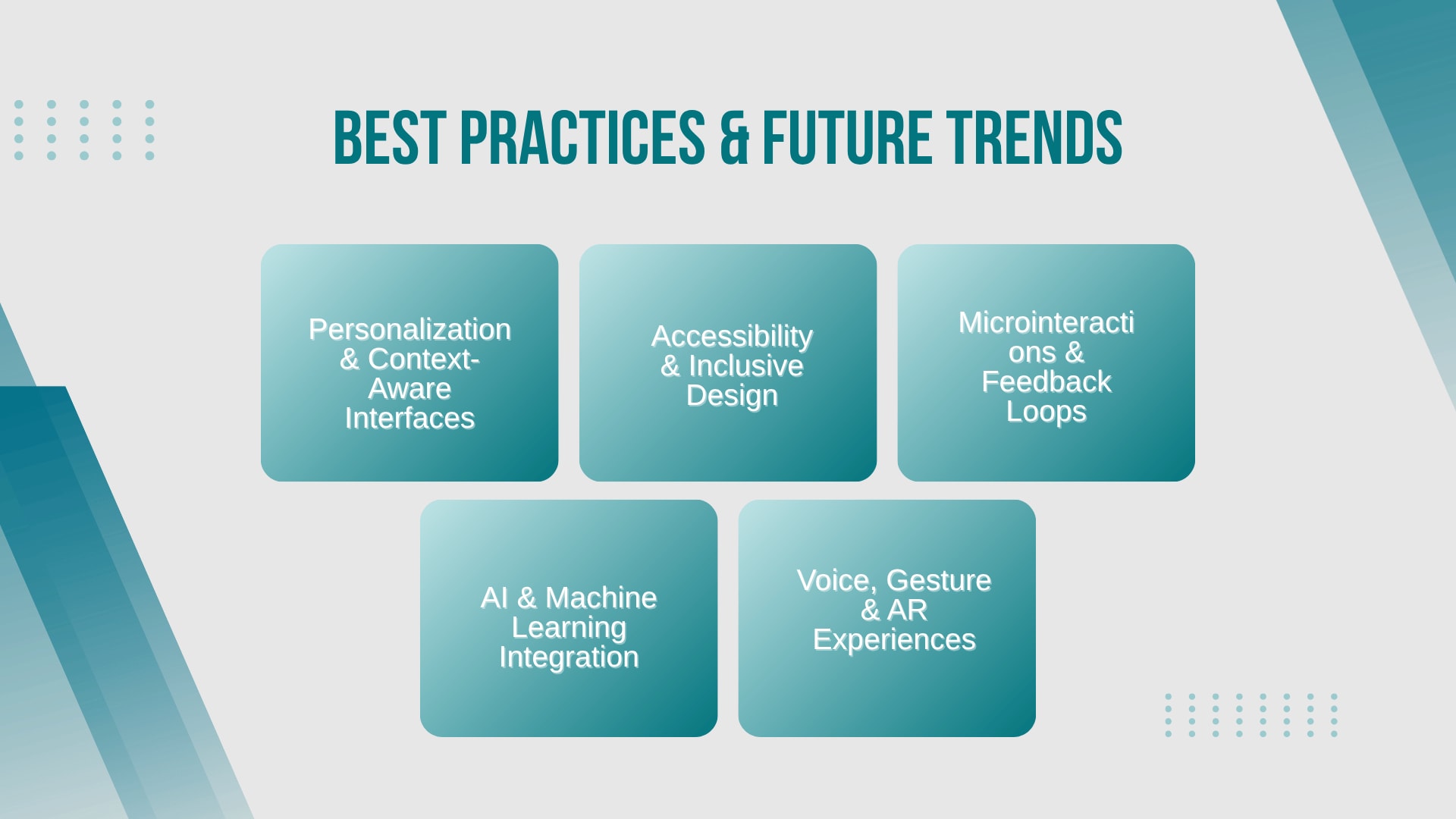
The future of Seamless User Experience for Your App involves AI-driven personalization, predictive interfaces, accessibility improvements, and immersive technologies. Businesses that continuously test and optimize UX will remain competitive as user expectations evolve.
Modern UX is becoming increasingly intelligent and personalized.
What are the latest UX trends shaping modern mobile applications?
Current UX trends prioritize speed, personalization, and convenience.
How is AI transforming seamless user experience for apps?
AI improves UX through:
Personalized recommendations
Smart search
Predictive interactions
Chatbots
Behavioral analysis
Why are voice interfaces becoming more popular in app UX?
Voice interfaces simplify interaction and improve accessibility.
They are especially useful for:
Navigation
Smart assistants
Hands-free interactions
How does predictive analytics improve user engagement?
Predictive analytics anticipates user needs.
Benefits include:
Faster decision-making
Personalized experiences
Reduced friction
How can businesses measure the success of their app user experience?
Businesses can measure the Seamless User Experience for Your App through retention metrics, engagement rates, usability testing, and behavioral analytics. Data-driven UX decisions improve long-term customer satisfaction and app performance.
Tracking UX performance helps businesses identify strengths and weaknesses.
What KPIs should businesses track for UX performance?
Important UX KPIs include:
KPIWhy It MattersRetention RateMeasures long-term engagementBounce RateIndicates user frustrationSession DurationShows engagement depthConversion RateReflects UX effectivenessTask Completion RateMeasures usability success
How do bounce rates and retention rates reflect UX quality?
High bounce rates often indicate:
Poor onboarding
Slow performance
Confusing interfaces
Strong retention rates typically reflect positive user experiences.
What tools help analyze user behavior in apps?
Popular UX analytics tools include:
Google Analytics
Hotjar
Mixpanel
Firebase Analytics
How can A/B testing improve seamless app experiences?
A/B testing helps businesses compare design variations and optimize user journeys.
What elements should businesses test in mobile apps?
Common testing areas include:
CTA buttons
Navigation layouts
Onboarding flows
Pricing displays
How can heatmaps and analytics improve UX decisions?
Heatmaps reveal how users interact with interfaces.
Businesses can identify:
Ignored content
Confusing layouts
High-engagement areas
Why is continuous UX testing essential for app growth?
Continuous testing helps businesses adapt to changing user expectations.
UX optimization should remain ongoing rather than one-time.
What common mistakes should businesses avoid in app UX design?
Poor UX decisions often damage engagement and retention.
Why do cluttered interfaces hurt app engagement?
Cluttered interfaces overwhelm users and reduce usability.
Too many options increase cognitive load.
How can poor onboarding increase app abandonment rates?
Confusing onboarding creates frustration early in the user journey.
Users may leave before understanding app value.
Why is ignoring user feedback dangerous for app success?
Ignoring feedback prevents businesses from identifying usability problems.
Customer feedback reveals real-world experience gaps.
How do successful brands create seamless user experiences for their apps?
Leading brands prioritize simplicity, consistency, and personalization.
What can startups learn from top-performing mobile apps?
Successful apps often share similar traits:
Fast performance
Intuitive navigation
Personalized experiences
Consistent branding
Continuous optimization
How do leading companies simplify complex user journeys?
Complex workflows are divided into manageable steps.
Examples include:
Guided onboarding
Progress indicators
Smart defaults
What UX lessons can businesses apply to improve customer satisfaction?
Businesses should prioritize:
Simplicity
Accessibility
Speed
User feedback
Consistency
How can startups and enterprises scale their app UX effectively?
Scaling UX requires long-term planning and structured systems.
What UX considerations matter when adding new app features?
Businesses should evaluate:
User impact
Interface complexity
Performance effects
Accessibility compatibility
How can scalable design systems maintain consistency?
Design systems standardize:
Typography
Colors
Components
Layout structures
Why should growing businesses invest in long-term UX strategies?
Long-term UX investments improve:
Customer loyalty
Brand trust
Product scalability
Competitive positioning
How can Amzsoft Innovexa help businesses create a seamless user experience for their app?
Businesses seeking high-performing digital products often partner with experienced UX-focused development teams.
What app UX and UI services does Amzsoft Innovexa provide?
Services commonly include:
UX strategy
UI design
App development
Performance optimization
Responsive design
Usability testing
How does Amzsoft Innovexa combine performance, design, and usability?
Their development approach emphasizes:
User-centered experiences
Fast-loading architecture
Scalable frameworks
Accessibility optimization
Why should businesses choose Amzsoft Innovexa for user-centric app development?
Businesses benefit from:
Customized UX strategies
Cross-platform expertise
Scalable app solutions
Long-term optimization support
What is the future of seamless user experience in app development?
The future of UX will focus heavily on intelligent automation, immersive experiences, and hyper-personalization.
How will AI-driven interfaces reshape mobile app UX?
AI-powered interfaces will improve:
Predictive recommendations
Voice interactions
Automated workflows
Adaptive interfaces
What role will AR and VR play in future app experiences?
AR and VR technologies will create immersive user journeys in industries such as:
Retail
Healthcare
Education
Gaming
Why will hyper-personalization become essential for app engagement?
Users increasingly expect experiences tailored to their preferences and behaviors.
Hyper-personalization improves:
Relevance
Engagement
Retention
How can businesses get started with creating a seamless user experience for their app today?
Businesses can start improving the Seamless User Experience for Your App by simplifying navigation, optimizing speed, researching user behavior, and continuously testing interfaces. Small usability improvements often produce significant gains in retention and engagement.
UX improvement starts with understanding users.
What steps should companies take before starting UX design?
Recommended steps include:
Conducting user research
Defining customer journeys
Identifying pain points
Building wireframes
Testing prototypes
How can businesses choose the right app development partner?
Businesses should evaluate:
UX expertise
Portfolio quality
Technical capabilities
Industry experience
Communication processes
What are the key takeaways for building a high-performing user-friendly app?
Key takeaways include:
Prioritize user needs
Simplify navigation
Optimize performance
Maintain consistency
Invest in accessibility
Continuously test and improve
A truly Seamless User Experience for Your App is not created through visuals alone. It results from understanding human behavior, removing friction, and designing interactions that feel natural across every touchpoint.
Businesses that consistently prioritize user experience are more likely to build lasting customer relationships, improve retention, and achieve sustainable app growth in an increasingly competitive digital landscape.
Amzsoft Innovexa
Engineering and delivery notes from the Amzsoft Innovexa team — fintech platforms, AI automation, and product engineering.