Modern businesses operate in a nonstop digital environment where even a few minutes of downtime can result in lost revenue, damaged customer trust, operational delays, and cybersecurity risks. From cloud platforms and payment systems to remote collaboration tools and customer databases, technology now supports nearly every business function.
That is why 24/7 Tech Support and Maintenance has become a critical business requirement rather than an optional IT expense. Companies across healthcare, finance, eCommerce, manufacturing, logistics, and professional services rely on continuous monitoring, proactive maintenance, and rapid-response IT support services to maintain uptime and protect business continuity.
Organizations that invest in managed IT services and proactive technical support solutions are better equipped to:
Prevent costly outages
Detect cyber threats early
Improve employee productivity
Maintain customer satisfaction
Reduce operational disruptions
Support remote work environments
Ensure compliance and data protection
Businesses that delay maintenance or depend solely on reactive support often face recurring technical issues, security vulnerabilities, and unpredictable downtime costs.
Technology providers such as Amzsoft Innovexa help organizations implement scalable business tech maintenance strategies through proactive monitoring, cybersecurity support, infrastructure management, and round-the-clock IT support designed to keep operations running smoothly.
Why is 24/7 Tech Support and Maintenance essential for modern business operations?
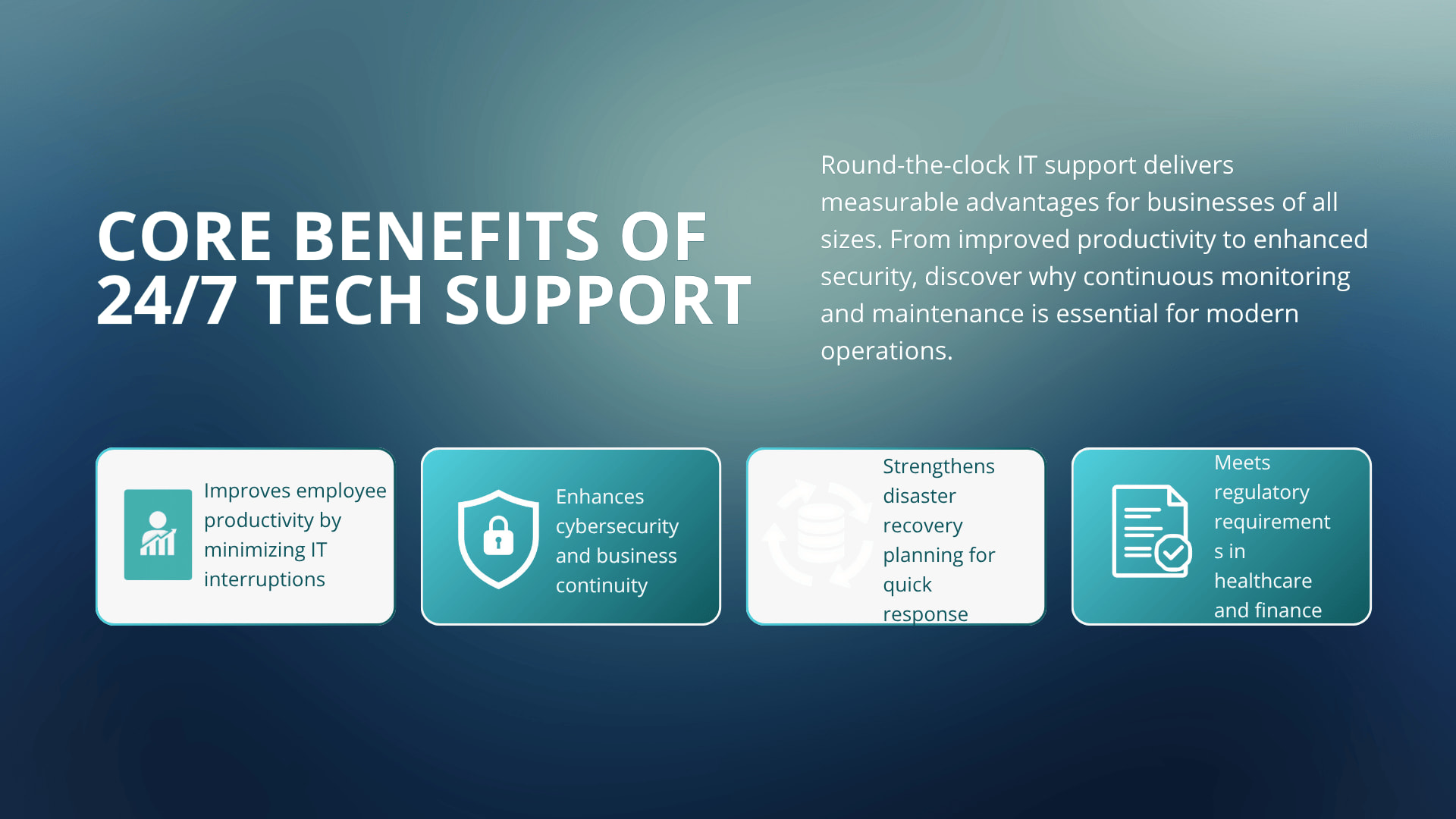
24/7 Tech Support and Maintenance is essential because modern businesses depend on uninterrupted digital systems to operate efficiently. Continuous monitoring, proactive maintenance, and rapid issue resolution help organizations reduce downtime, strengthen cybersecurity, maintain productivity, and ensure business continuity in increasingly technology-driven environments.
Businesses no longer operate only during traditional office hours. Customers shop online overnight, remote employees work across time zones, and cloud applications remain active 24/7. Any system interruption can immediately affect operations, customer experience, and revenue generation.
For example:
An eCommerce website outage during peak traffic hours can lead to abandoned purchases
A healthcare system failure can delay patient access to critical records
A cybersecurity incident can disrupt operations for days or weeks
A failed server can halt internal communication and workflow processes
Continuous IT support services help businesses address these risks proactively instead of waiting for systems to fail.
Key benefits of 24/7 business tech maintenance include:
Real-time server monitoring services
Faster incident response
Improved cybersecurity monitoring
Reduced operational downtime
Better infrastructure performance
Enhanced business continuity support
Predictable IT management costs
Organizations increasingly recognize that reactive support models are no longer sufficient for modern digital operations.
What does 24/7 Tech Support and Maintenance actually include?
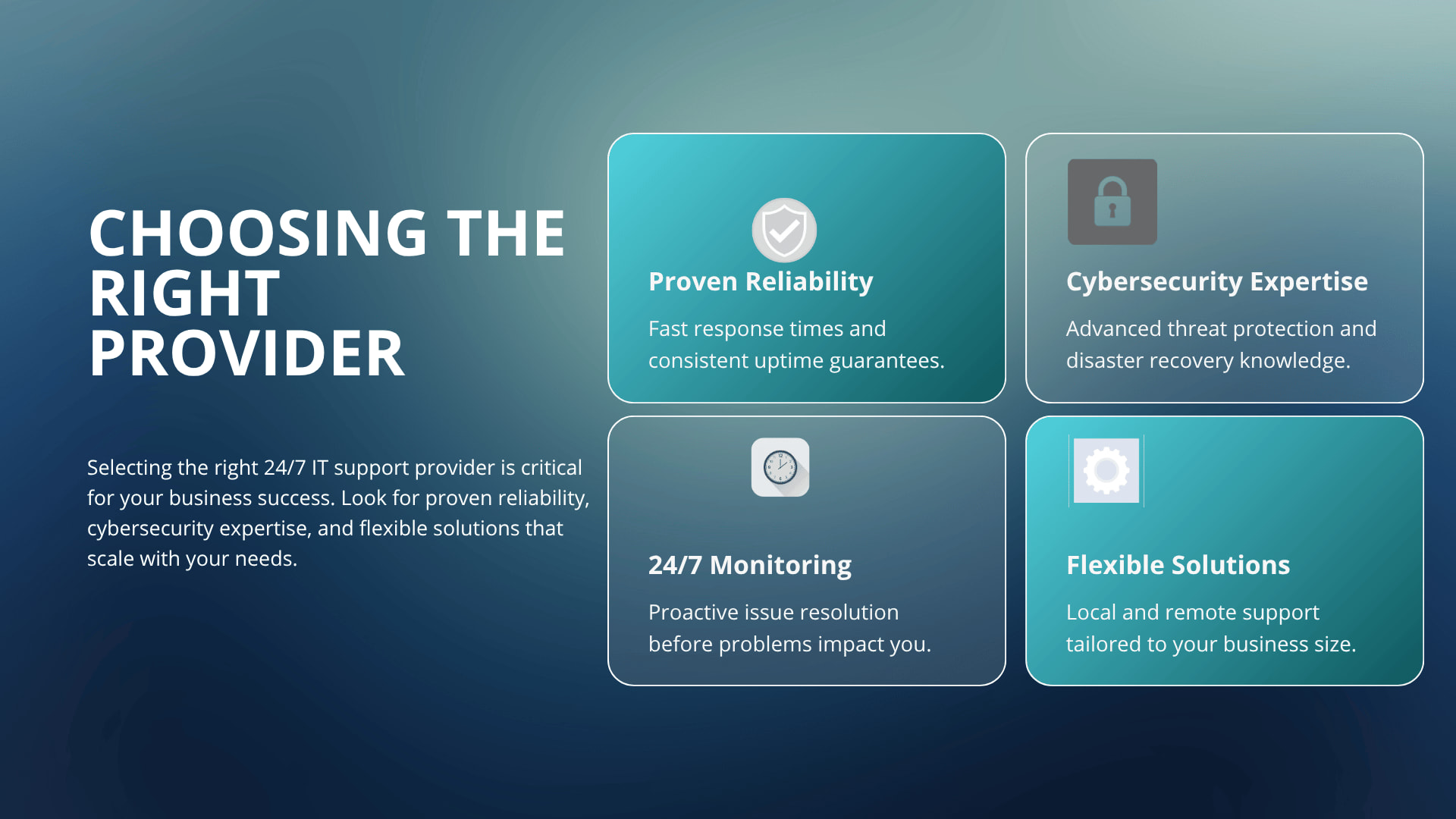
24/7 Tech Support and Maintenance includes proactive monitoring, help desk support, server management, cybersecurity monitoring, software updates, cloud maintenance, infrastructure optimization, backup management, and emergency technical assistance designed to keep business systems operational at all times.
Comprehensive managed IT services involve far more than answering technical support tickets. Effective technical support solutions combine prevention, monitoring, optimization, and rapid response.
Typical services include:
Core Components of 24/7 IT Support
Network monitoring
Server monitoring services
Cybersecurity monitoring
Help desk support
Software patch management
Cloud infrastructure maintenance
Data backup and recovery
Hardware diagnostics
Performance optimization
Disaster recovery support
Businesses often partner with experienced providers like Amzsoft Innovexa to centralize these services under one managed IT framework.
How do managed IT services handle proactive system monitoring?
Managed IT services use automated monitoring tools, alerts, analytics, and real-time diagnostics to identify potential technical problems before they impact business operations. Proactive monitoring helps reduce downtime, improve performance, and prevent system failures.
Instead of waiting for systems to crash, modern IT support services continuously monitor:
CPU usage
Server health
Network traffic
Application performance
Security events
Storage capacity
Endpoint activity
When unusual behavior appears, technicians can investigate immediately.
For example:
A growing memory leak in a business application may initially appear harmless. However, proactive monitoring tools can detect abnormal resource consumption before it causes a complete outage.
This preventive approach significantly reduces emergency downtime incidents.
What are server monitoring services and why do they matter?
Server monitoring services track server performance, uptime, storage usage, and system health in real time. These services help businesses prevent outages, maintain application availability, and improve overall infrastructure reliability.
Servers support essential business functions including:
Websites
Databases
Email systems
Customer portals
Cloud applications
File sharing platforms
Without proper monitoring, small issues can escalate rapidly.
Common server risks include:
Overheating
Disk failures
Network interruptions
Malware infections
Storage overload
Software conflicts
Continuous server monitoring services allow IT teams to respond before users experience disruptions.
What is included in IT infrastructure maintenance plans?
IT infrastructure maintenance includes hardware support, software updates, patch management, cloud optimization, network maintenance, performance testing, and backup verification to ensure stable and secure business operations.
Typical maintenance tasks include:
Replacing aging hardware
Updating operating systems
Monitoring storage capacity
Testing backup systems
Optimizing network configurations
Securing endpoints
Maintaining cloud resources
Without routine maintenance, businesses often experience:
Slow system performance
Increased downtime
Security vulnerabilities
Compatibility issues
Reduced productivity
How do technical support solutions reduce operational downtime?
Technical support solutions reduce downtime by identifying issues early, resolving incidents quickly, automating maintenance tasks, and providing rapid troubleshooting assistance whenever systems fail.
Downtime can impact:
Revenue
Customer trust
Employee efficiency
Brand reputation
Compliance obligations
A responsive IT support environment minimizes these risks through:
Remote troubleshooting
Automated alerts
Help desk escalation
Real-time monitoring
Backup failover systems
Why are businesses moving from reactive IT support to proactive maintenance?
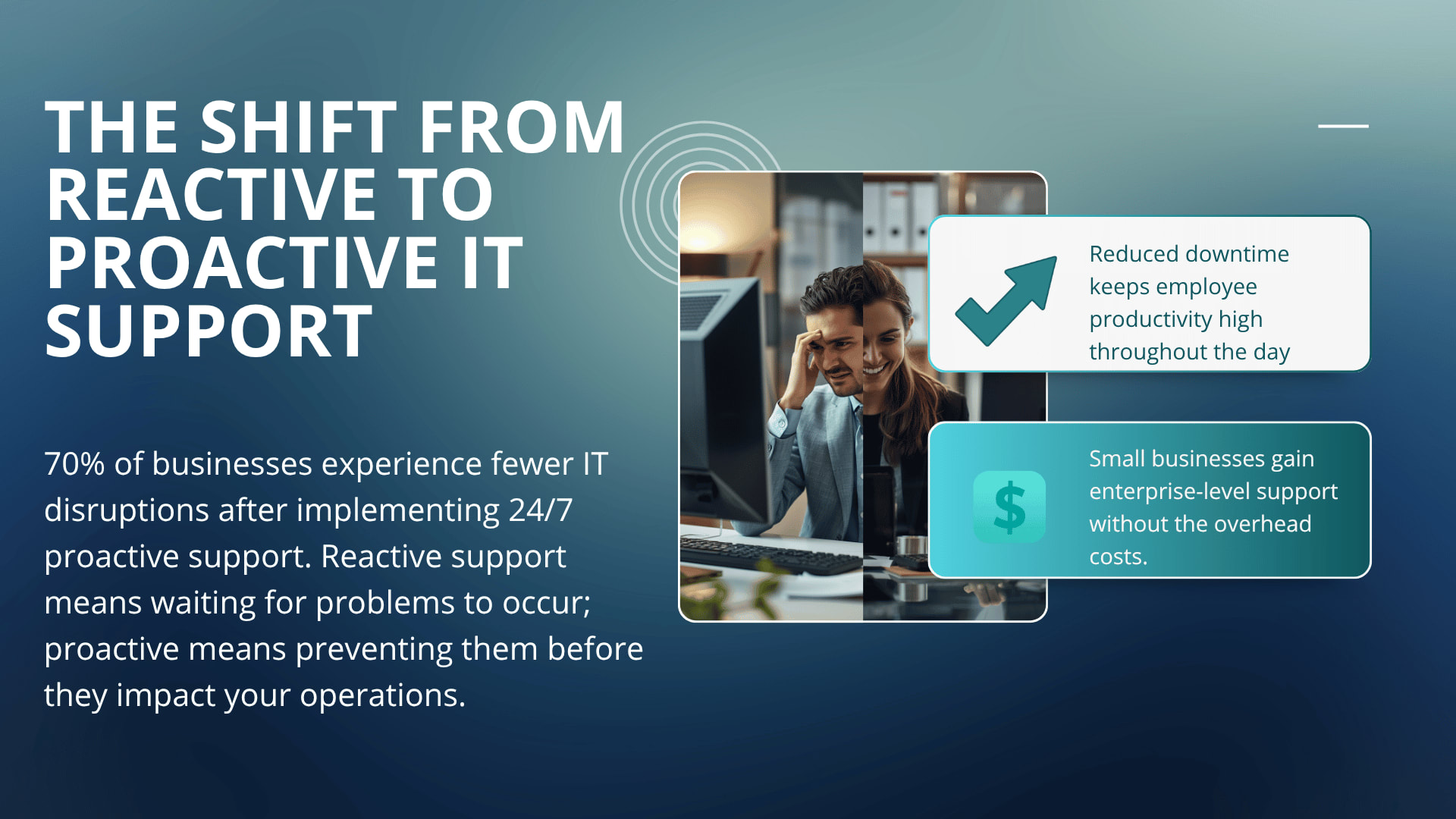
Businesses are shifting toward proactive maintenance because preventing technical issues is significantly more cost-effective and less disruptive than reacting to emergencies after systems fail. Proactive managed IT services improve uptime, security, and long-term operational efficiency.
Reactive IT support waits until something breaks. Proactive maintenance identifies risks before failures occur.
This shift is driven by:
Increased cybersecurity threats
Greater dependence on cloud systems
Remote workforce growth
Rising downtime costs
Customer expectations for uninterrupted service
Businesses now prioritize prevention over recovery.
How does round-the-clock IT support prevent costly outages?
Round-the-clock IT support prevents outages through continuous monitoring, automated alerts, rapid issue resolution, and proactive maintenance activities that reduce the likelihood of major technical failures.
A server issue at 2 AM can become a full business outage by morning if no monitoring exists.
Continuous IT support teams can:
Detect failures instantly
Investigate root causes quickly
Deploy fixes remotely
Escalate emergencies immediately
Prevent cascading infrastructure failures
This rapid-response model significantly reduces downtime costs.
Why is proactive business tech maintenance more cost-effective?
Proactive business tech maintenance reduces expensive emergency repairs, lowers downtime losses, extends hardware lifespan, and minimizes cybersecurity recovery expenses.
Businesses often underestimate the hidden cost of reactive support.
Common reactive IT expenses include:
Emergency consulting fees
Lost employee productivity
Customer churn
Data recovery costs
Regulatory fines
Reputation damage
Preventive maintenance offers predictable operational costs and improved system stability.
How can automated monitoring detect issues before users notice them?
Automated monitoring tools continuously analyze infrastructure performance and trigger alerts when abnormal behavior appears. This allows IT teams to intervene before employees or customers experience disruptions.
Examples include:
Detecting unusual login attempts
Identifying storage limitations
Monitoring CPU spikes
Tracking application latency
Predicting hardware failures
This proactive approach improves reliability and user experience.
What risks do companies face without continuous IT support services?
Businesses without continuous IT support face higher risks of downtime, cybersecurity incidents, operational disruptions, data loss, and delayed recovery during emergencies.
Key risks include:
Unpatched vulnerabilities
Extended outages
Missed security alerts
Backup failures
Slower incident response
Reduced employee productivity
Many organizations only recognize these vulnerabilities after a major disruption occurs.
How does 24/7 IT support improve employee productivity?
24/7 Tech Support and Maintenance improves employee productivity by reducing technical disruptions, resolving issues quickly, supporting remote teams, and ensuring systems remain accessible and efficient throughout business operations.
Employees lose valuable time when systems crash, applications freeze, or network issues remain unresolved.
Continuous technical support helps employees:
Access systems reliably
Resolve technical problems faster
Collaborate remotely
Maintain workflow continuity
Reduce frustration and delays
Businesses with responsive IT support environments typically experience smoother day-to-day operations.
Businesses With vs Without 24/7 Tech Support
AreaBusinesses With 24/7 SupportBusinesses Without 24/7 SupportDowntime ResponseImmediate issue resolutionDelayed troubleshootingCybersecurity MonitoringContinuous threat detectionHigher breach riskEmployee ProductivityMinimal interruptionsFrequent delaysDisaster RecoveryFaster restorationLonger outagesCustomer ExperienceStable digital servicesService disruptionsInfrastructure MaintenanceProactive optimizationReactive repairs
Why do remote and hybrid teams require continuous technical assistance?
Remote employees depend heavily on secure and stable digital infrastructure. Continuous support ensures remote users can access applications, collaborate securely, and resolve technical issues regardless of location or time zone.
Remote work environments require support for:
VPN connectivity
Cloud collaboration platforms
Endpoint security
Remote device management
Video conferencing tools
Without effective support, remote productivity declines rapidly.
Tags
Amzsoft Innovexa
Engineering and delivery notes from the Amzsoft Innovexa team — fintech platforms, AI automation, and product engineering.