
Digital products are no longer competing only on features. In 2026, users judge brands based on how quickly they understand an interface, how smoothly they complete tasks, and how confident they feel while using a product. That shift is exactly why UI/UX Design in 2026 has become a core business strategy instead of just a design process.
Businesses across industries are investing heavily in intuitive digital experiences because user expectations have changed dramatically. Consumers now expect fast-loading interfaces, accessible navigation, personalized experiences, mobile-first layouts, and frictionless interactions across devices. A confusing interface often leads to immediate abandonment.
Modern companies such as Apple, Airbnb, and Netflix continue to dominate because their digital experiences reduce effort for users. Their interfaces feel natural, predictable, and efficient.
At the same time, AI-powered search engines and conversational search systems increasingly prioritize websites that provide strong usability signals. This means UI/UX Design in 2026 directly influences SEO performance, conversion rates, engagement metrics, retention, and customer trust.
Many businesses now work with agencies like Amzsoft Innovexa to improve customer journeys, redesign digital products, and create scalable user experiences that align with modern behavior patterns.
What Is UI/UX Design in 2026?
Why Has UI/UX Design Become So Important in 2026?
UI/UX Design in 2026 is more important because users expect instant, intuitive, and personalized digital experiences across all devices. Businesses with poor interfaces lose users faster than ever, while companies with strong user experience design improve engagement, trust, conversions, and long-term customer retention.
UI refers to User Interface design, which focuses on the visual elements users interact with, including:
buttons
typography
layouts
colors
menus
icons
animations
UX refers to User Experience design, which focuses on the overall usability and satisfaction users feel during interactions.
In earlier years, businesses could succeed with feature-heavy products even if the experience was average. That is no longer true. In 2026, users compare every digital interaction against the best experiences they already know.
For example:
Users expect checkout flows to feel as smooth as Amazon
Streaming experiences are compared to Spotify
App navigation is judged against Instagram
This comparison culture has raised digital standards across every industry.
Several major trends have accelerated the importance of UI/UX:
AI-powered personalization
Voice-based search behavior
Multi-device usage patterns
Accessibility expectations
Faster attention drop-offs
Competitive digital marketplaces
A user now decides whether to continue using a website within seconds. Poor navigation, visual clutter, slow interfaces, or confusing layouts immediately reduce trust.
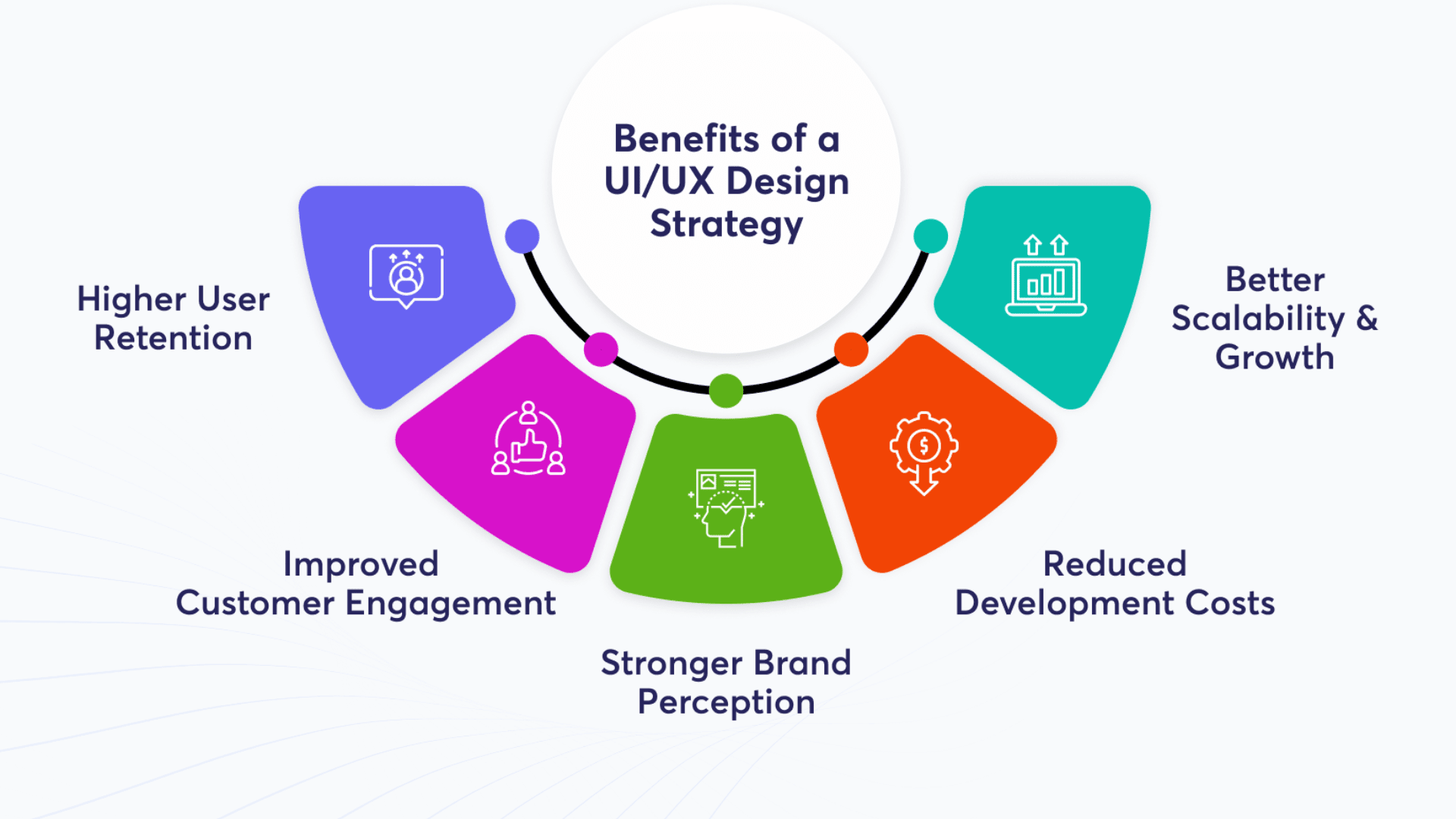
Businesses have also noticed a strong connection between user experience and revenue metrics. Better UX improves:
lead generation
sales conversions
customer loyalty
session duration
engagement rates
app retention
customer satisfaction
That is why UI/UX is now considered a business growth investment rather than a creative expense.
How Does UI/UX Design Impact Business Growth?
Can Better UI/UX Increase Revenue and Customer Retention?
Yes. UI/UX Design in 2026 directly affects conversions, retention, trust, and customer satisfaction. Businesses with user-friendly digital experiences reduce friction during customer journeys, which increases engagement and encourages users to complete purchases, subscriptions, or inquiries more consistently.
User experience impacts nearly every stage of the customer journey.
When users visit a website or app, they subconsciously evaluate:
ease of navigation
clarity of information
visual trustworthiness
responsiveness
loading speed
emotional comfort
If any of these fail, users leave.
Businesses now track UX-related metrics closely because they influence profitability. Common metrics include:
bounce rate
time on site
task completion rate
customer lifetime value
conversion rate
abandonment rate
A poorly designed experience often creates invisible friction.
For example:
An eCommerce store may lose customers because:
the checkout process is too long
product filters are confusing
mobile buttons are difficult to tap
trust indicators are missing
The products themselves may not be the problem. The experience is.
Good UI/UX vs Poor UI/UX Impact on Business Growth
FactorGood UI/UXPoor UI/UXNavigationClear and intuitiveConfusing and inconsistentConversion RateHigherLowerUser TrustStrongWeakMobile ExperienceOptimizedFrustratingBounce RateReducedIncreasedCustomer RetentionHigherLowerBrand PerceptionProfessionalUnreliableCustomer Support LoadLowerHigher
Modern businesses increasingly redesign platforms to simplify experiences instead of adding unnecessary complexity.
A fintech company, for instance, may improve loan applications by reducing forms from 12 fields to 5 fields. That small UX decision can increase submissions dramatically.
Similarly, SaaS companies often redesign dashboards to:
reduce learning curves
improve onboarding
simplify workflows
increase product adoption
This is one reason modern digital agencies such as Amzsoft Innovexa focus heavily on usability-driven interfaces instead of purely aesthetic designs.
How User Behavior Has Changed in 2026
What Do Modern Users Expect From Digital Experiences?
Modern users expect speed, personalization, accessibility, simplicity, and consistency. UI/UX Design in 2026 must support fast decision-making and effortless navigation because users have lower tolerance for friction, delays, or confusing interfaces than ever before.
User behavior has evolved rapidly over the past few years.
People now interact with:
smart devices
AI assistants
voice interfaces
wearable technology
mobile apps
conversational platforms
As a result, patience levels have declined significantly.
Today’s users expect:
Instant page loading
Clear navigation
Minimal learning effort
Personalized experiences
Accessibility compatibility
Mobile-first usability
Seamless transitions between devices
Research across digital industries consistently shows that users abandon websites quickly when experiences feel complicated.
Important User Behavior Trends in 2026
1. Mobile Dominance Continues
Most users now browse primarily on smartphones. Mobile-first design is no longer optional.
Key mobile UX priorities include:
larger touch targets
faster loading
simplified menus
thumb-friendly navigation
vertical content optimization
2. Users Scan Instead of Reading
People rarely read websites line by line.
Instead, users:
scan headings
check summaries
look for visual hierarchy
search for quick answers
This is why snippet-friendly UX writing matters more than ever.
3. Trust Is Built Visually
Users judge credibility within seconds.
Professional layouts, consistent typography, spacing, and modern UI patterns strongly influence trust perception.
4. Personalization Expectations Have Increased
AI-driven recommendations are now common.
Users expect:
personalized suggestions
adaptive interfaces
contextual experiences
predictive search behavior
When personalization feels useful instead of intrusive, engagement improves significantly.
Why UI/UX Design Matters for SEO and AI Search
Does UI/UX Affect Search Rankings in 2026?
Yes. UI/UX Design in 2026 strongly influences SEO performance because search engines prioritize websites with better usability, engagement, accessibility, and content experience. AI-driven search systems also evaluate user interaction patterns more intelligently than before.
Search optimization is no longer only about keywords and backlinks.
Modern SEO increasingly overlaps with user experience.
Search engines analyze:
bounce rates
engagement signals
mobile usability
page experience
accessibility
content readability
navigation clarity
A poorly designed interface negatively affects these signals.
For example:
If users quickly leave a page because:
text is difficult to read
navigation is confusing
ads interrupt content
buttons are hard to click
search systems interpret that as a poor user experience.
Why AI Search Systems Care About UX
AI search engines and conversational systems now prioritize pages that:
answer questions clearly
structure information logically
improve readability
provide contextual clarity
support voice search behavior
This is why answer-first formatting performs well in modern search ecosystems.
UX Elements That Support SEO
1. Clear Content Structure
Well-organized headings help:
readers
search engines
AI summarization systems
2. Faster Page Speed
Slow websites increase abandonment rates.
Performance optimization is now a UX and SEO requirement.
3. Mobile Optimization
Google and AI systems prioritize mobile usability heavily.
4. Accessibility
Accessible websites support:
screen readers
keyboard navigation
inclusive browsing
Accessibility improvements also enhance SEO performance.
5. Readability
Readable typography and spacing improve:
engagement
comprehension
dwell time
Businesses increasingly combine SEO and UX strategies together because separating them no longer works effectively in 2026.
Tags
Amzsoft Innovexa
Engineering and delivery notes from the Amzsoft Innovexa team — fintech platforms, AI automation, and product engineering.